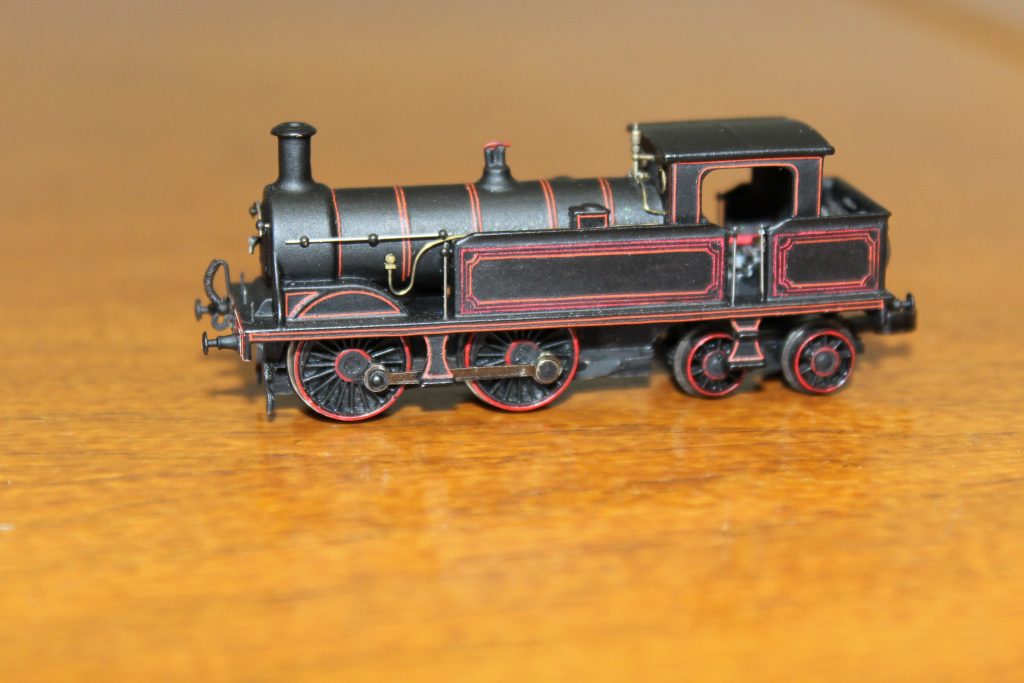
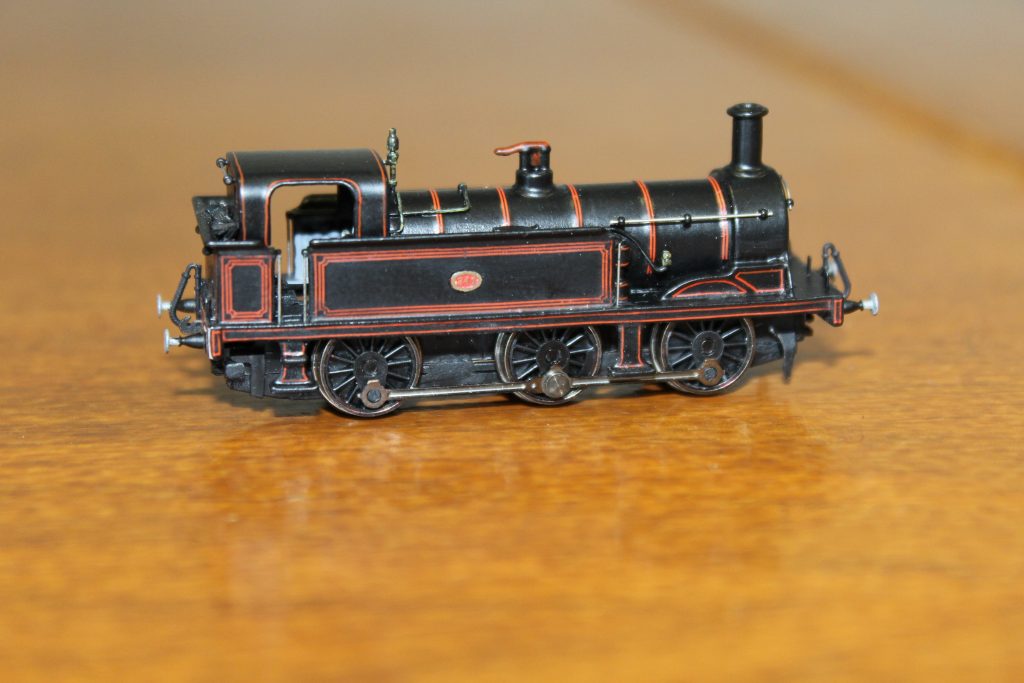
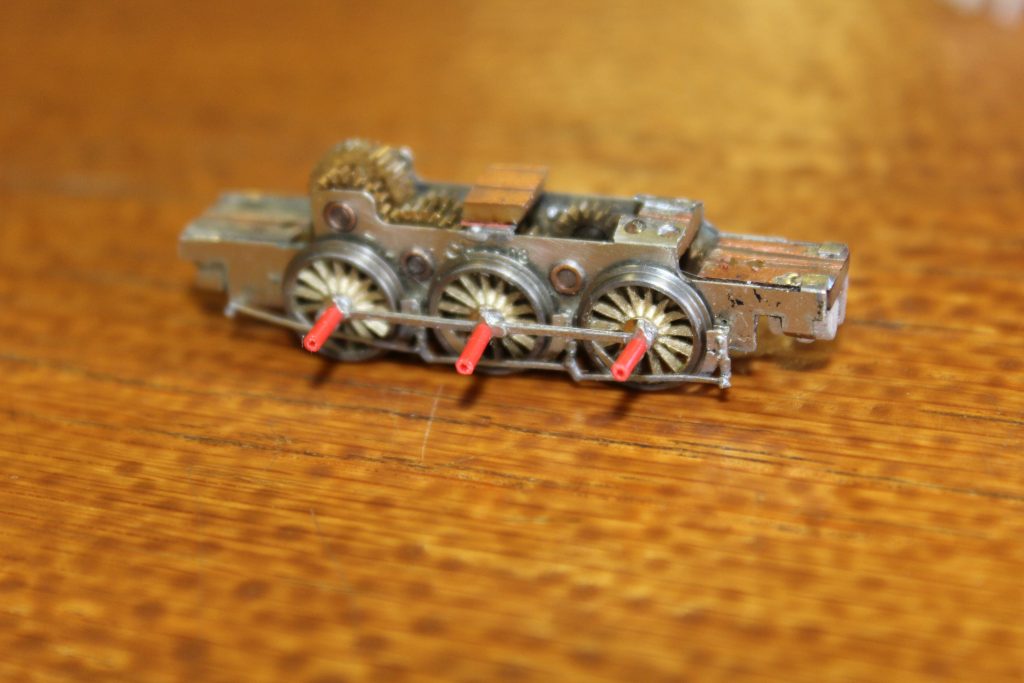
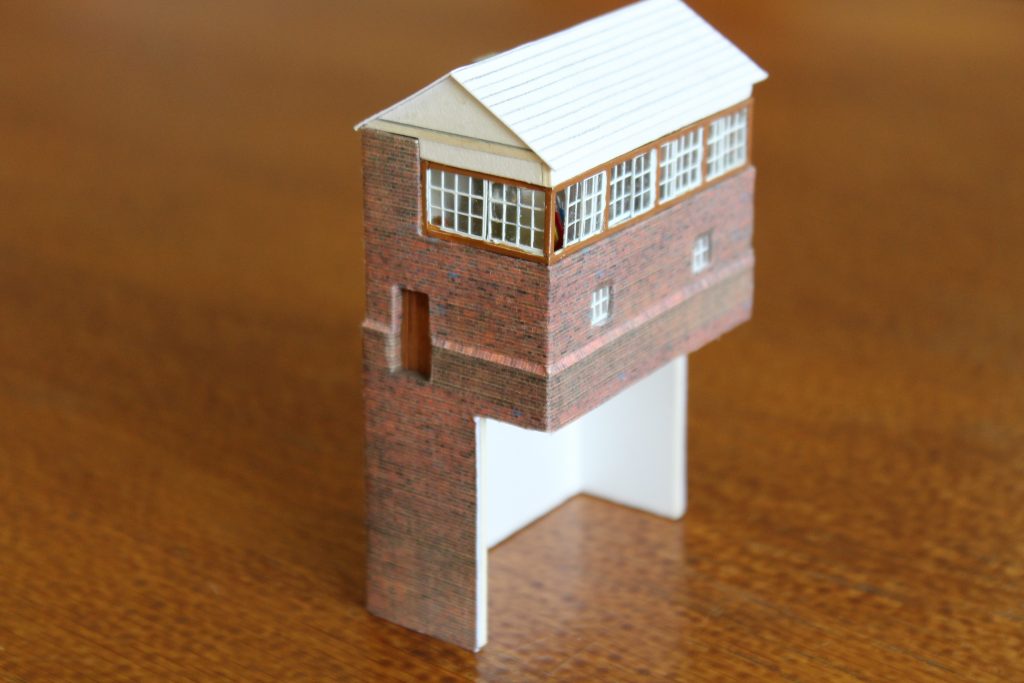
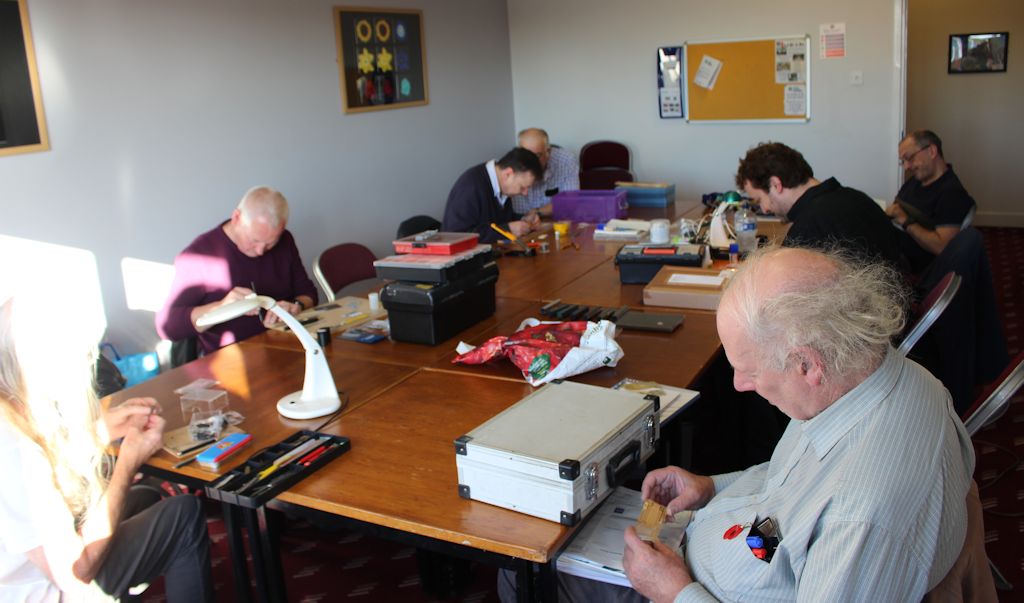
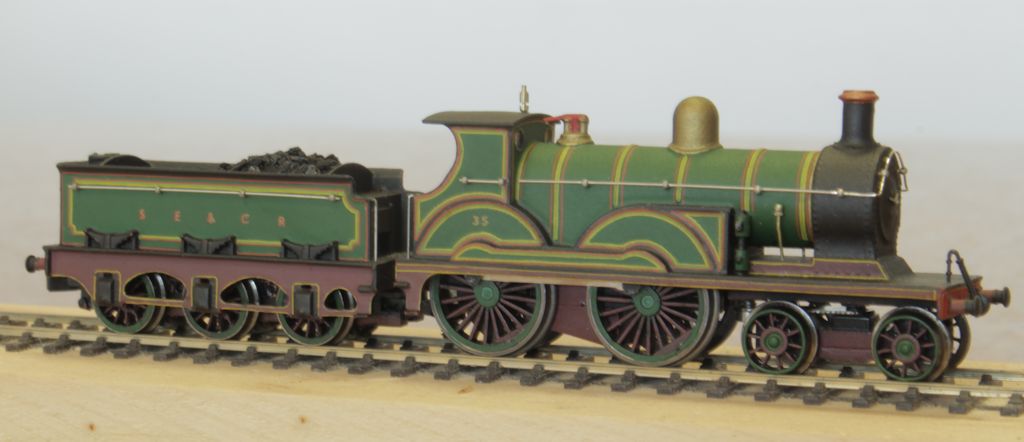
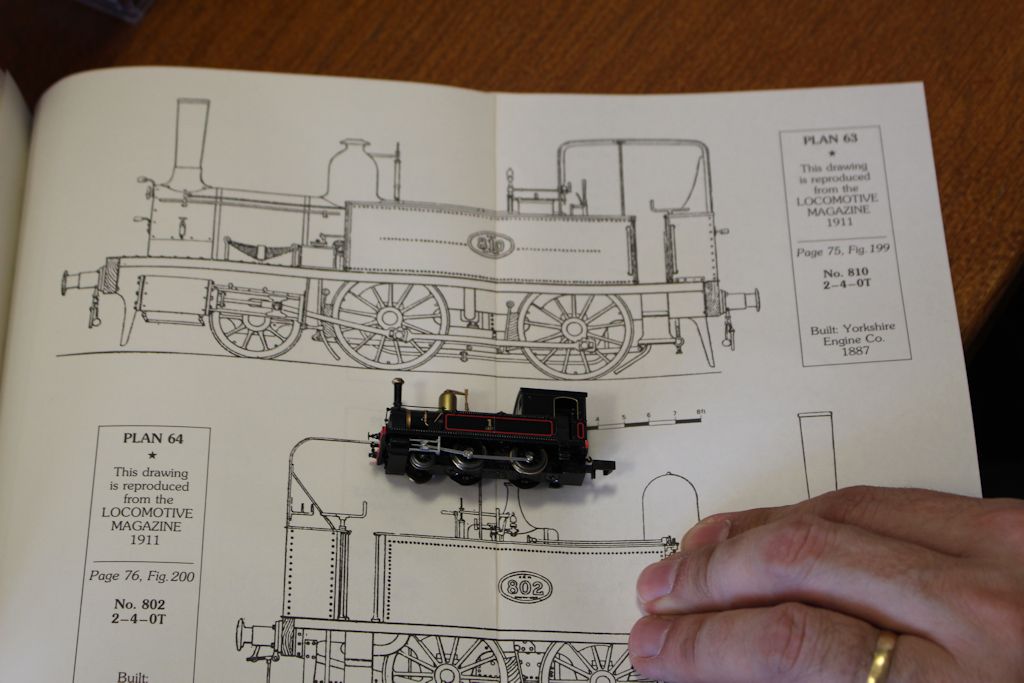
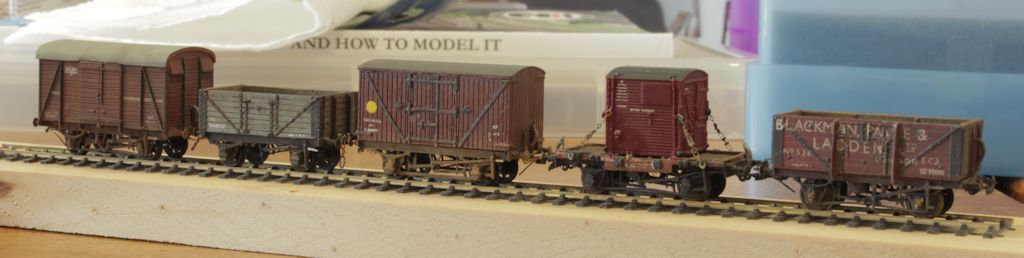
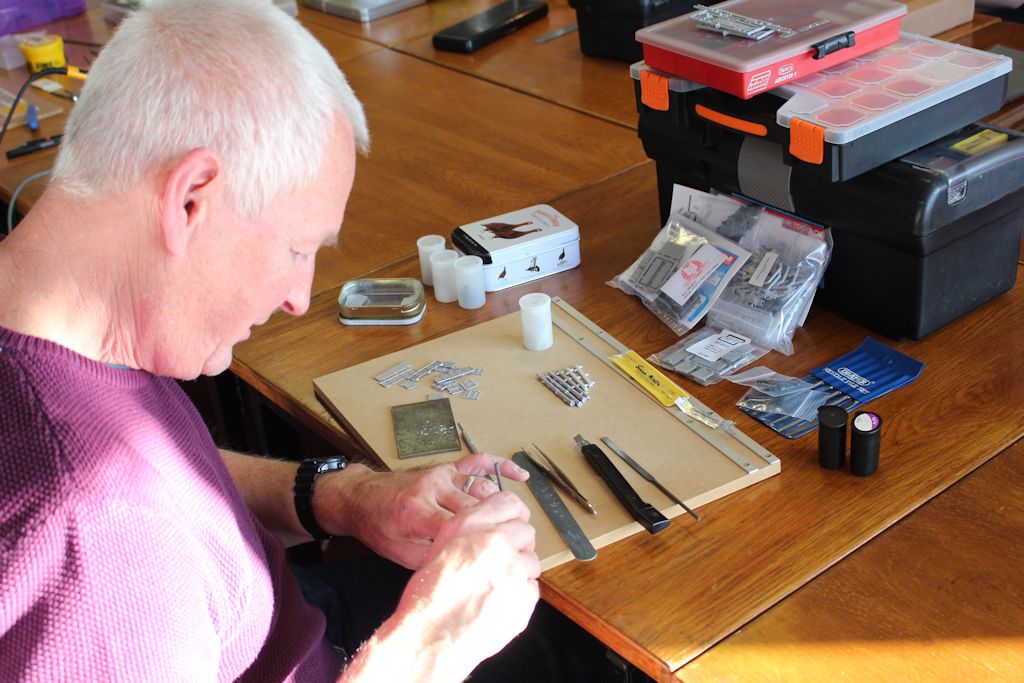
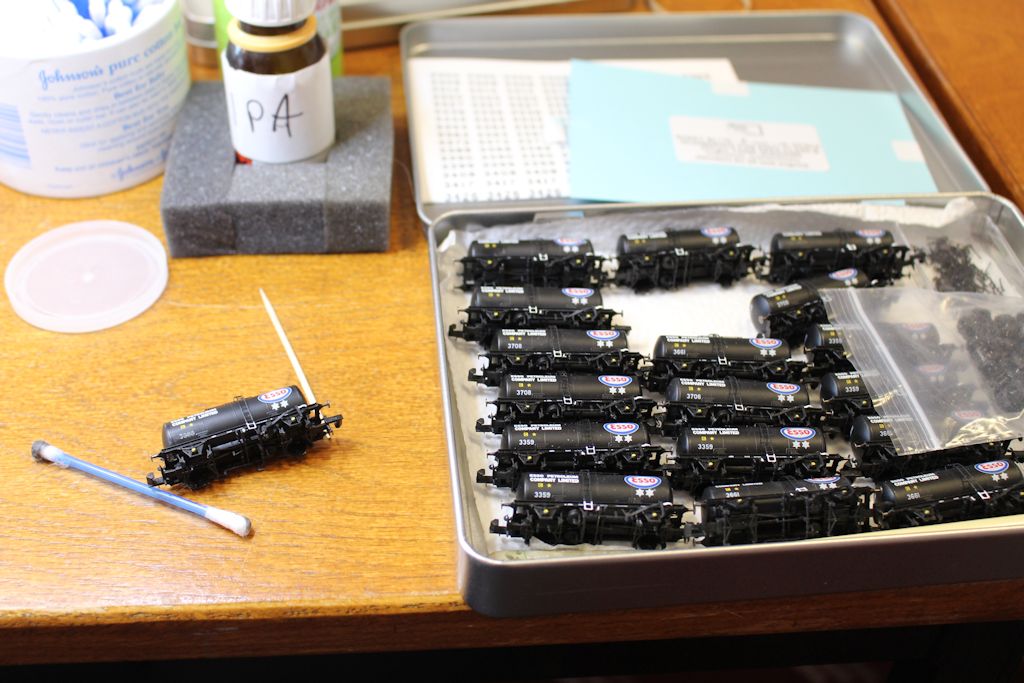
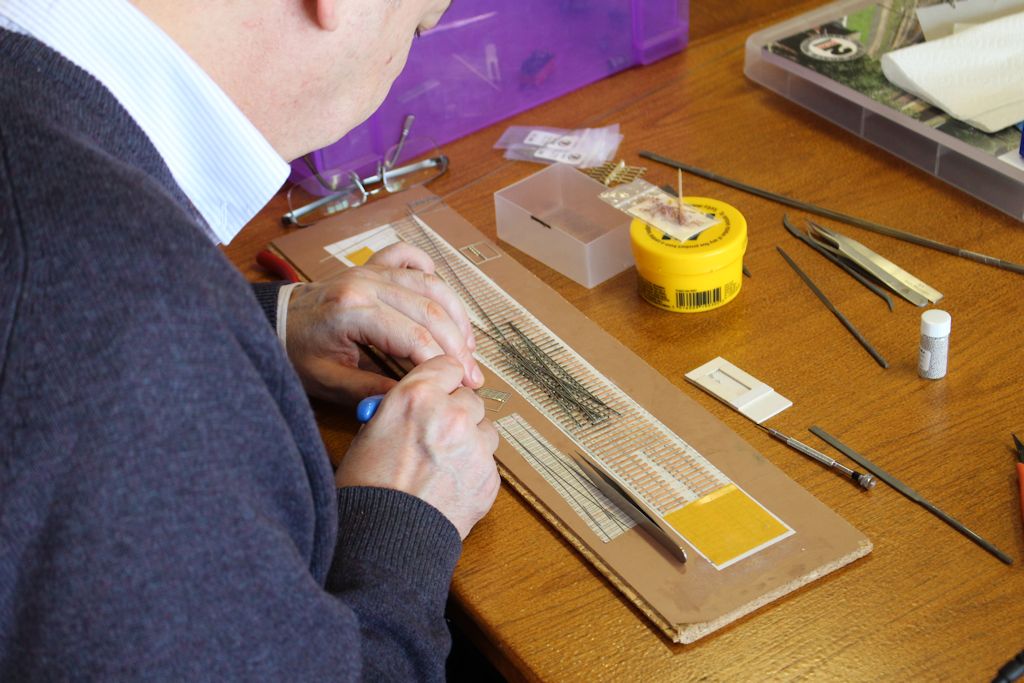
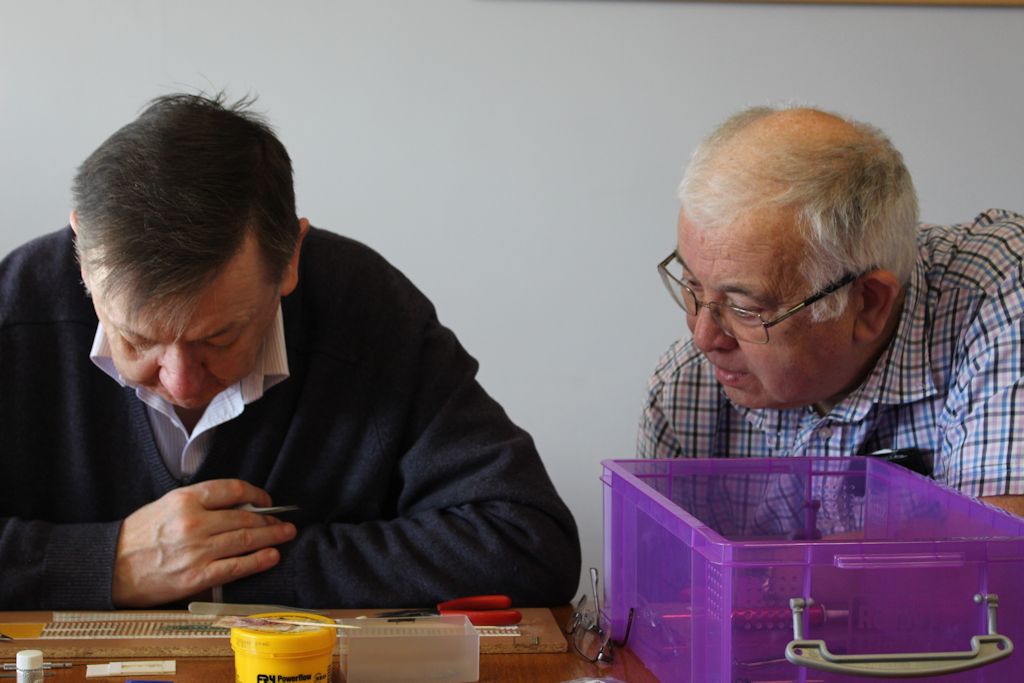
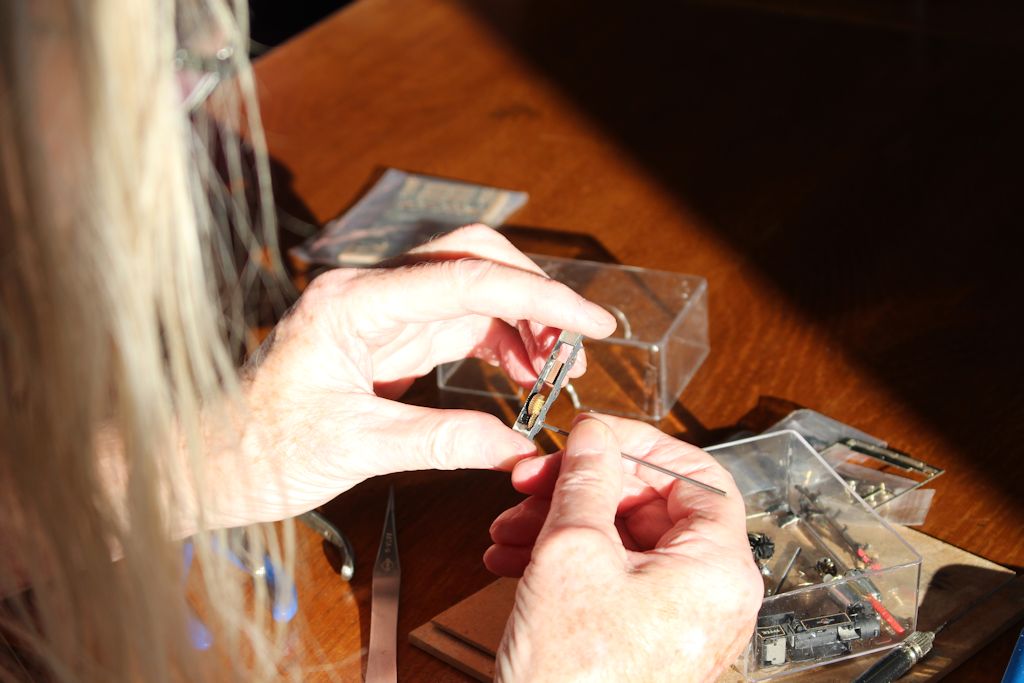
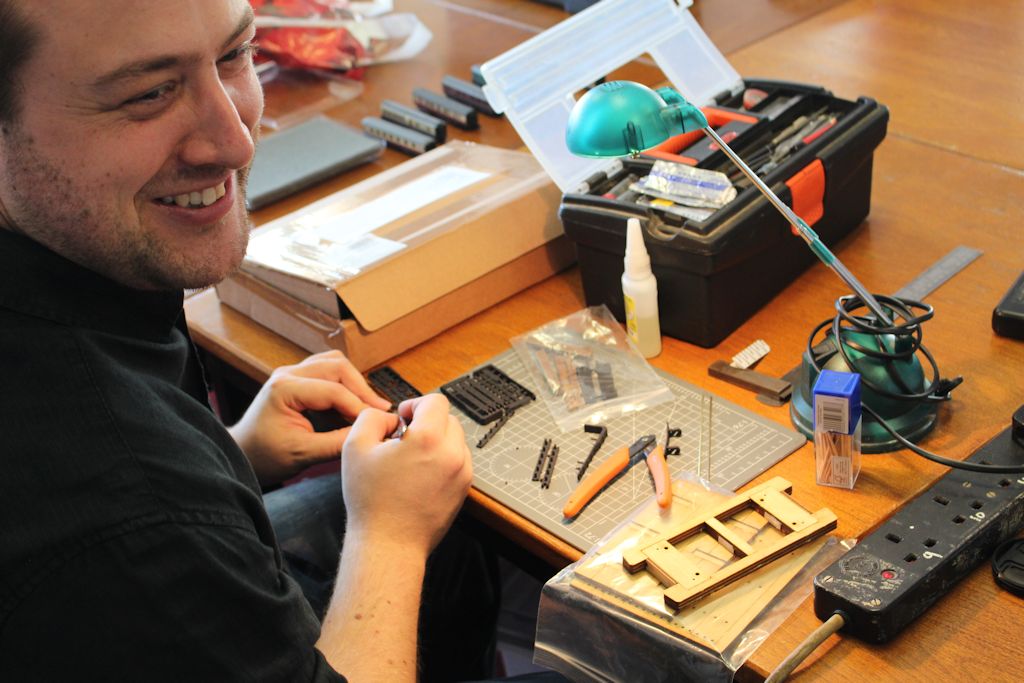
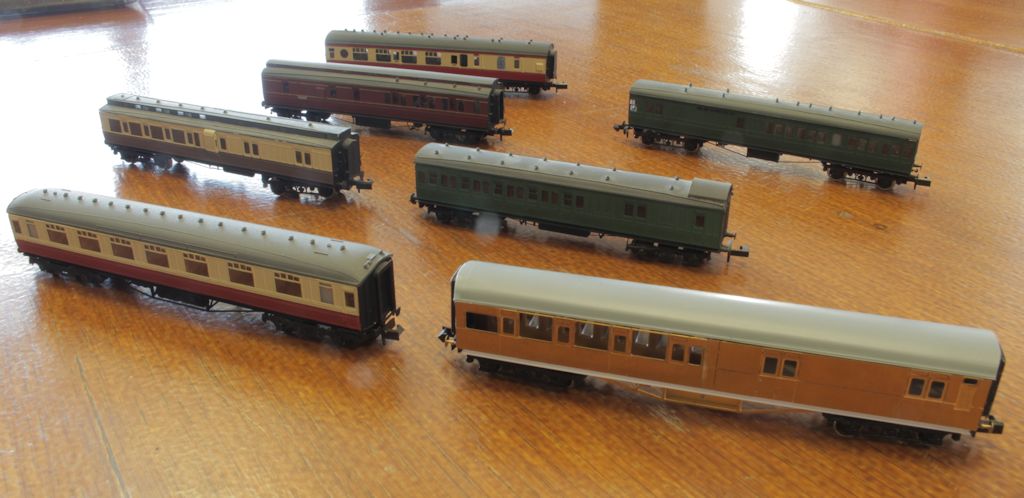
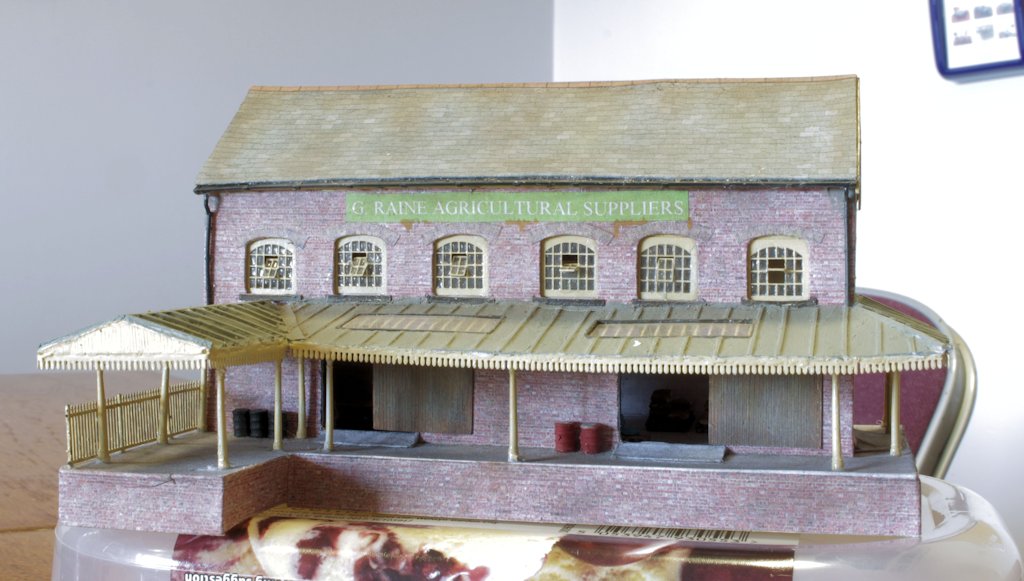
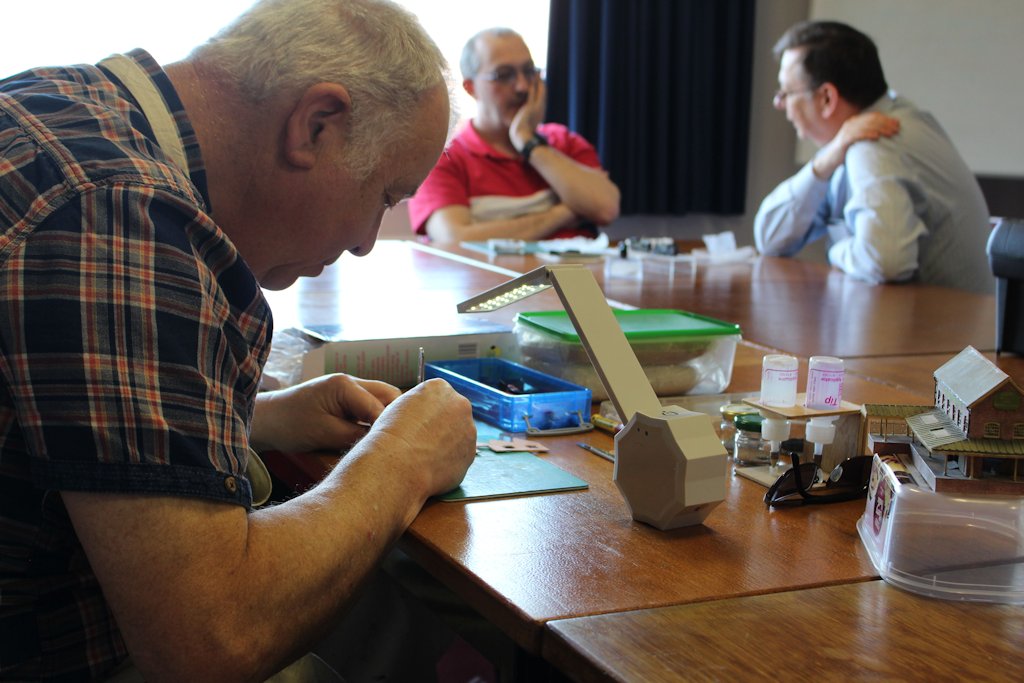
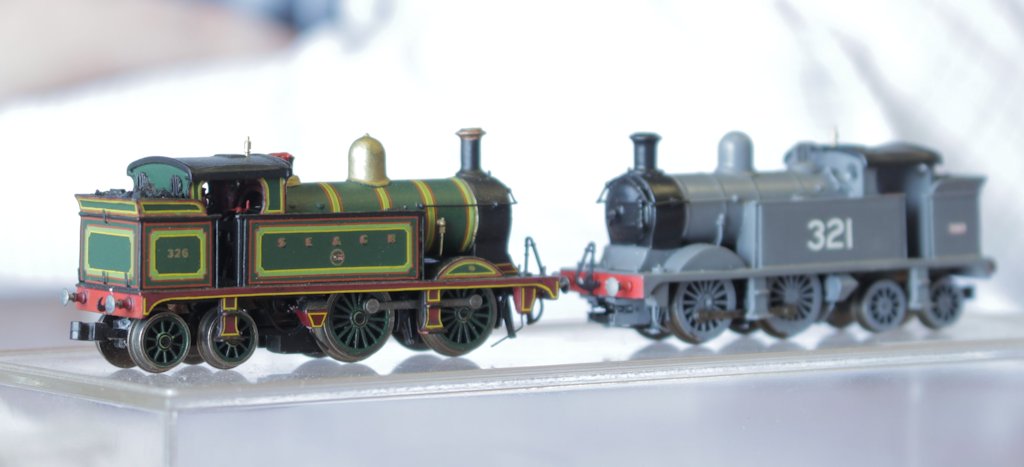
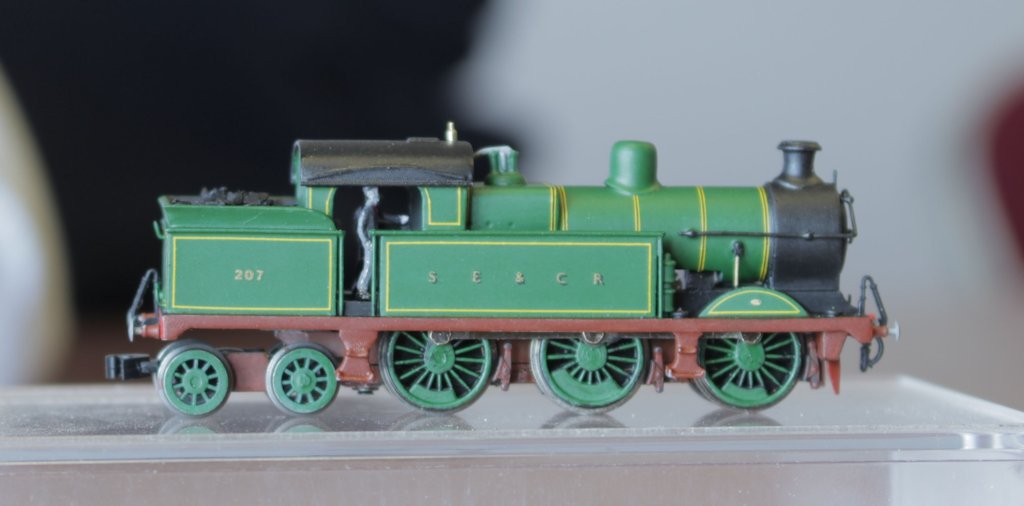
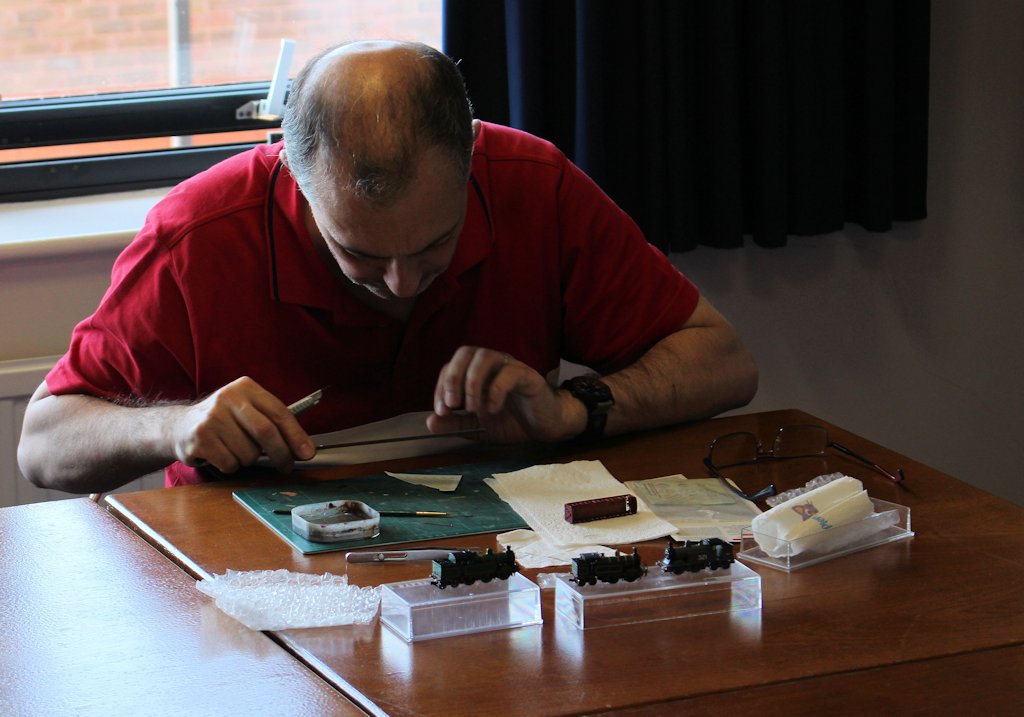
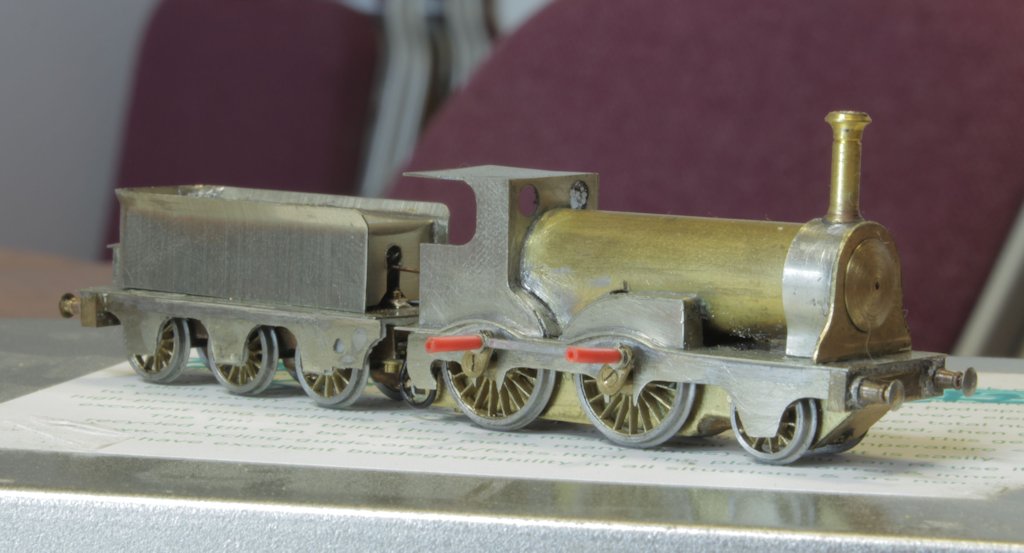
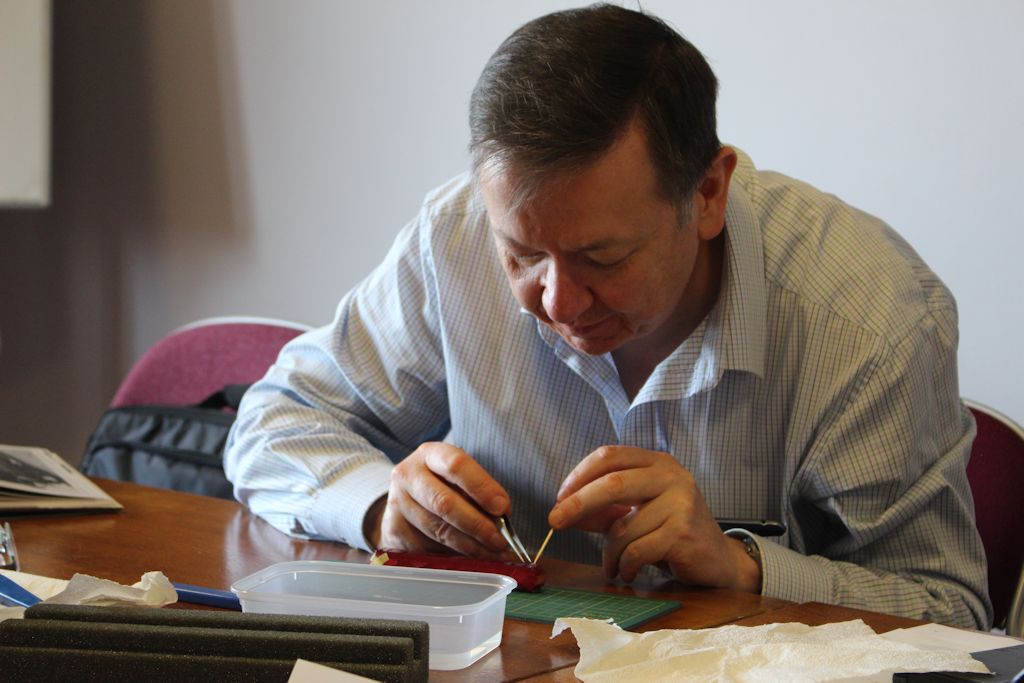
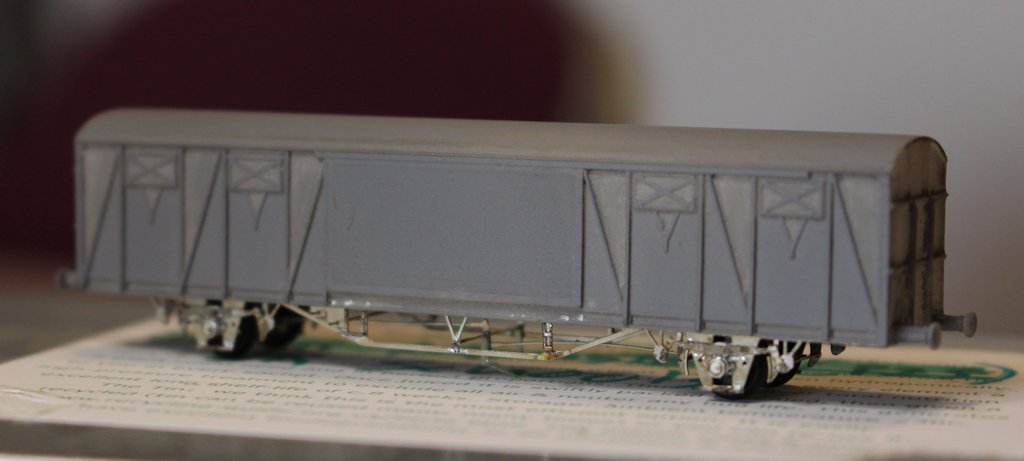
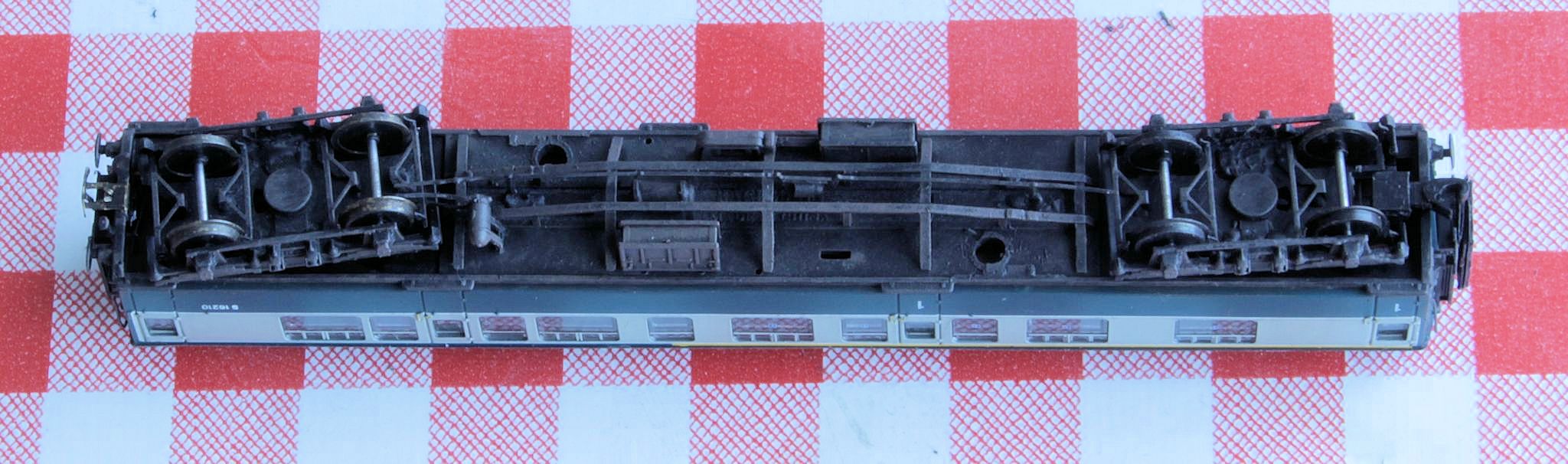
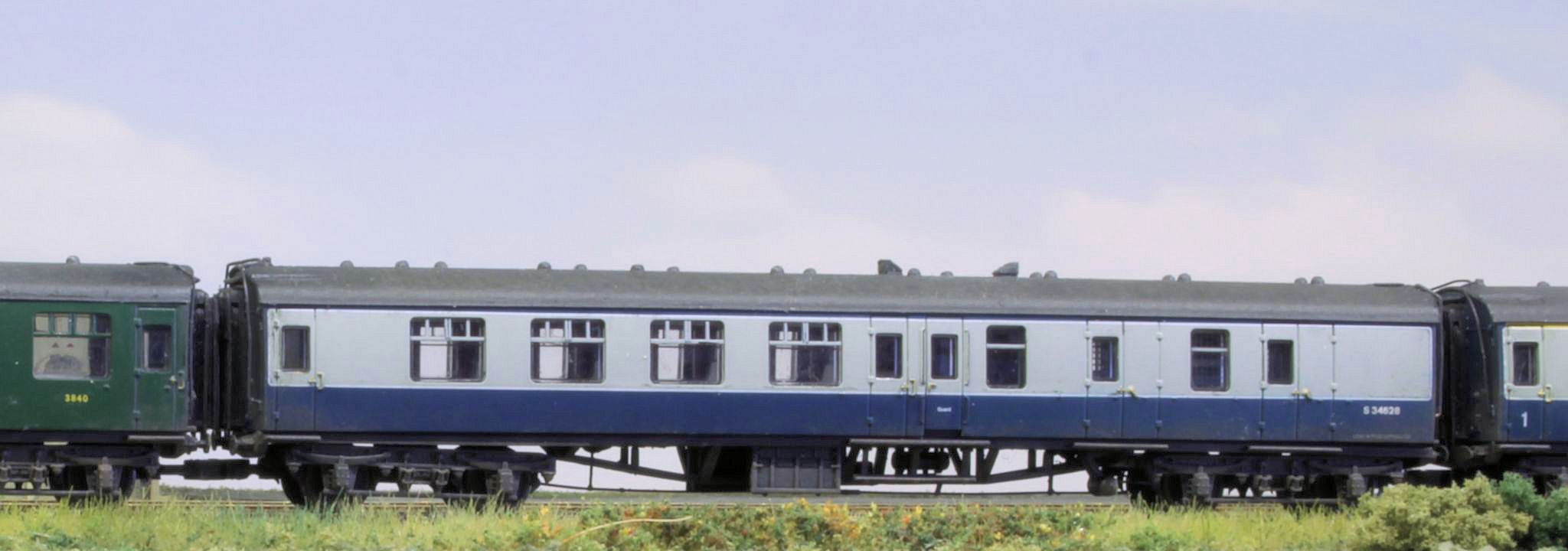
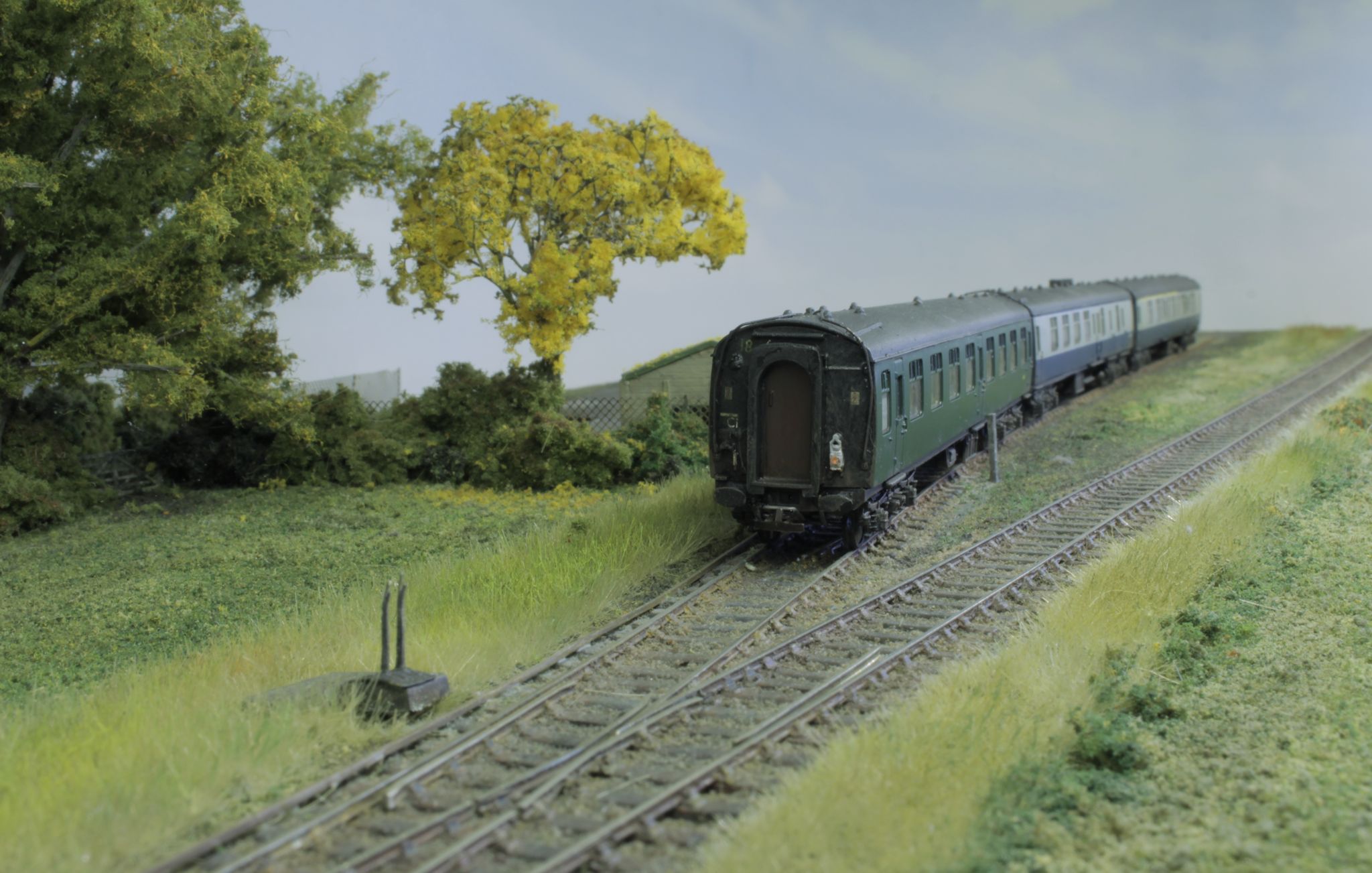
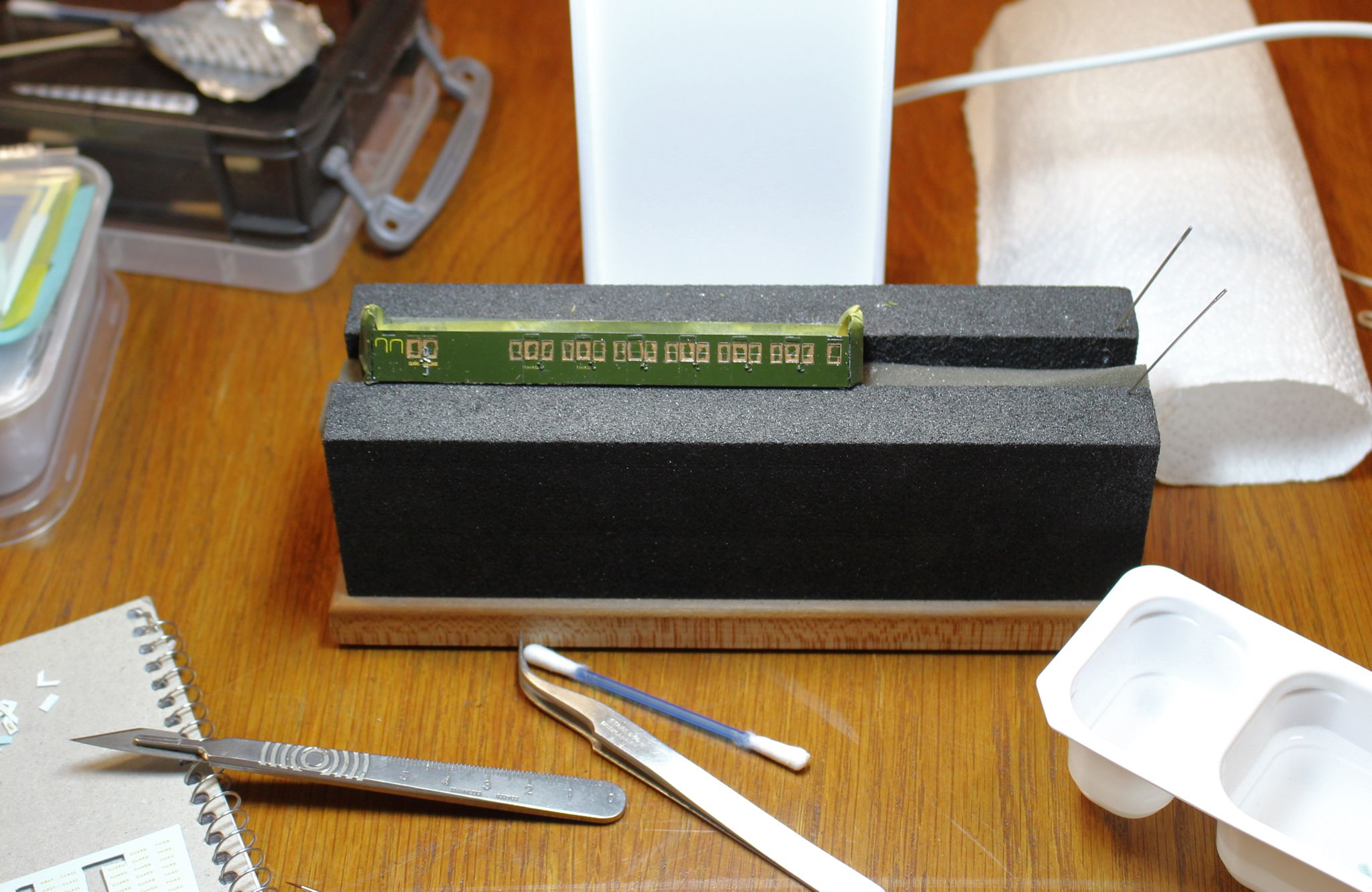
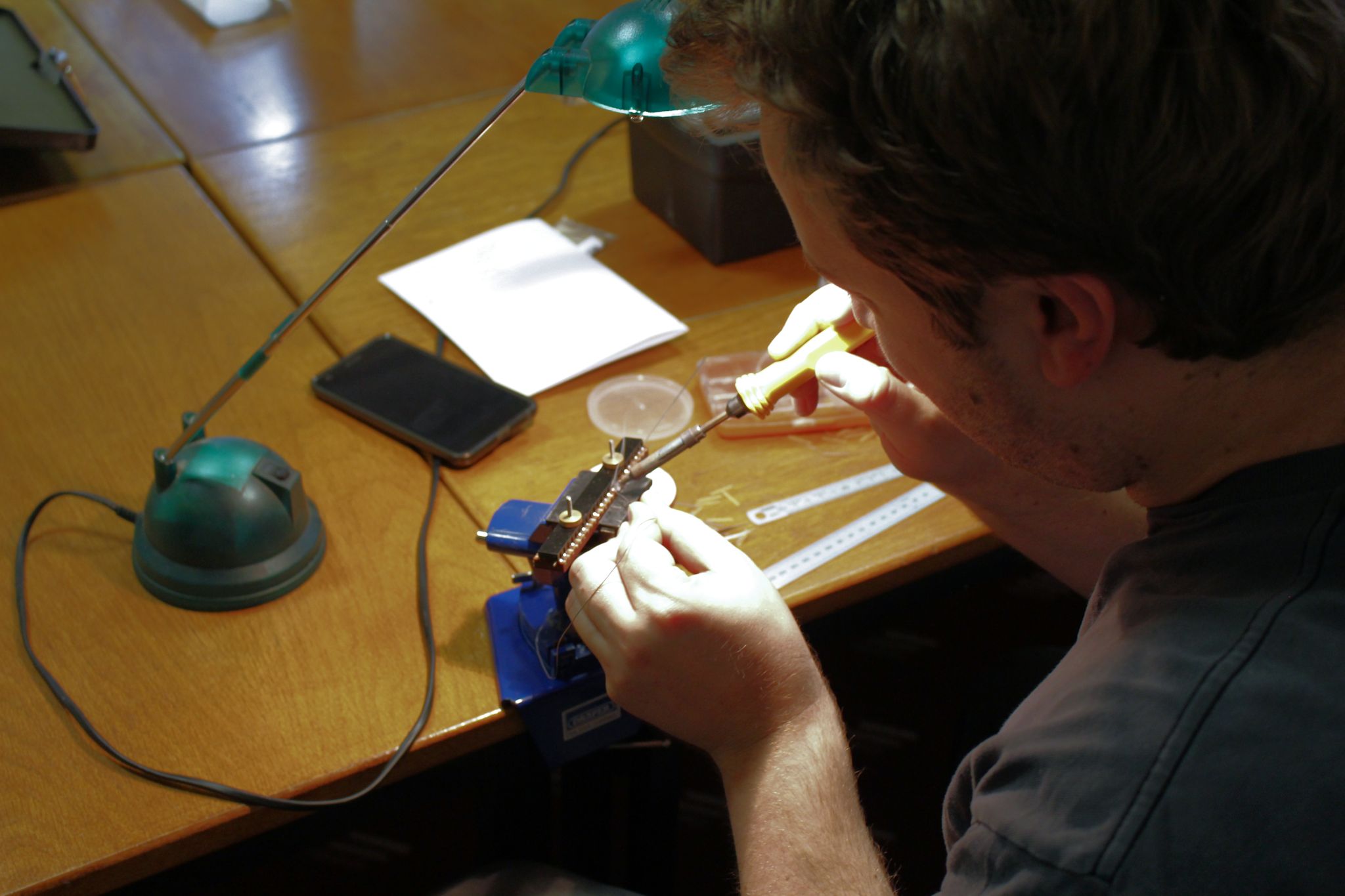
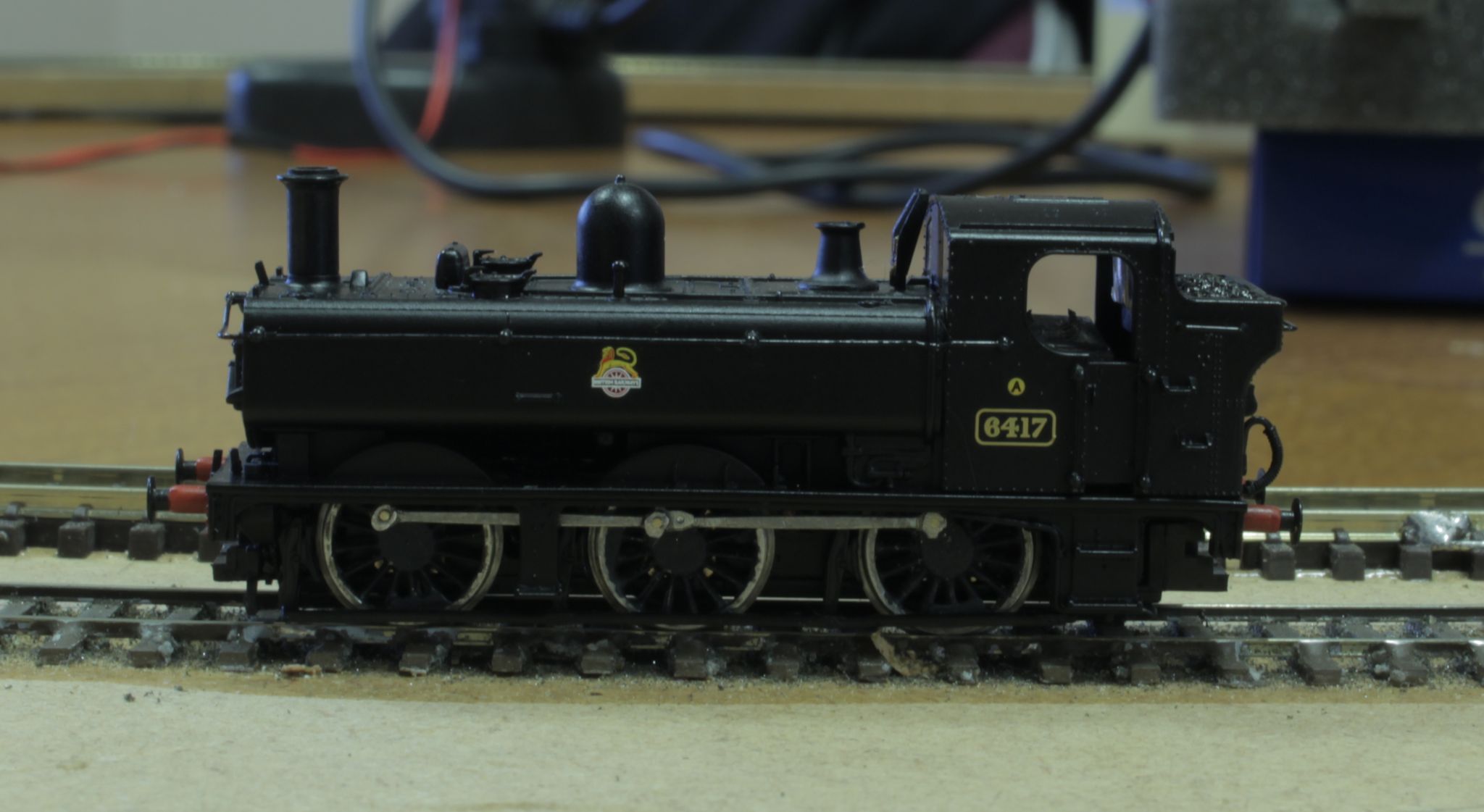
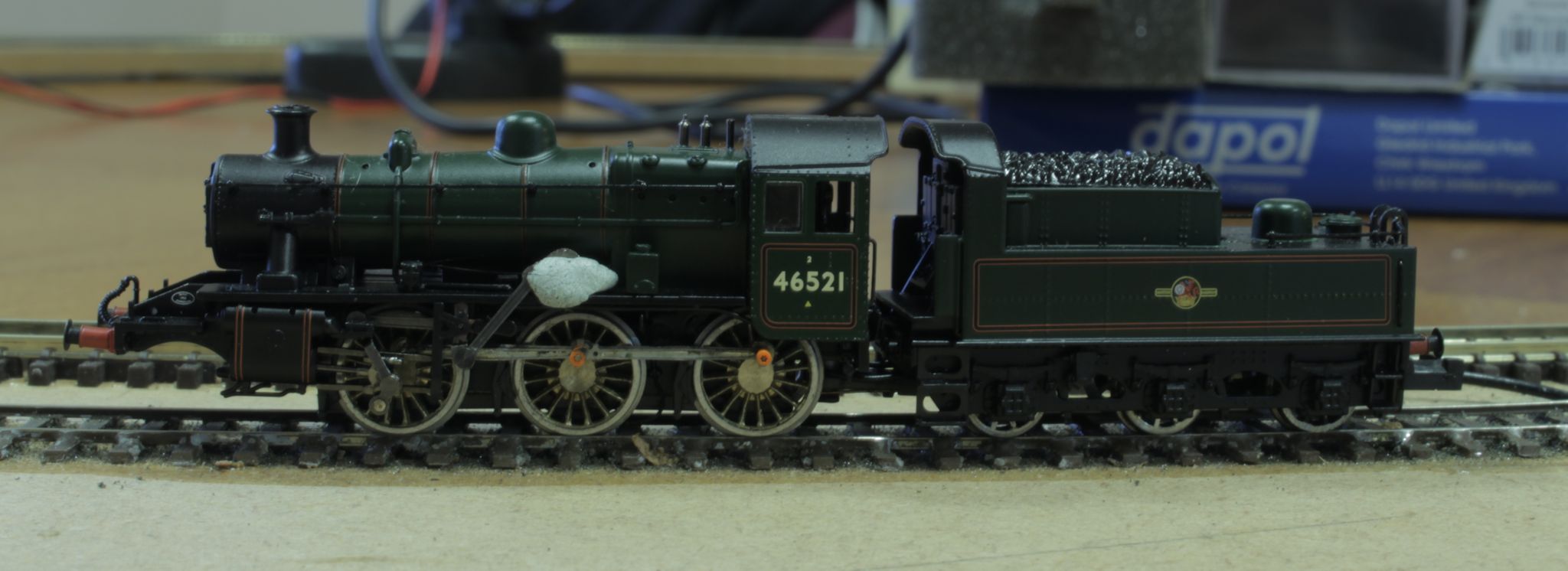
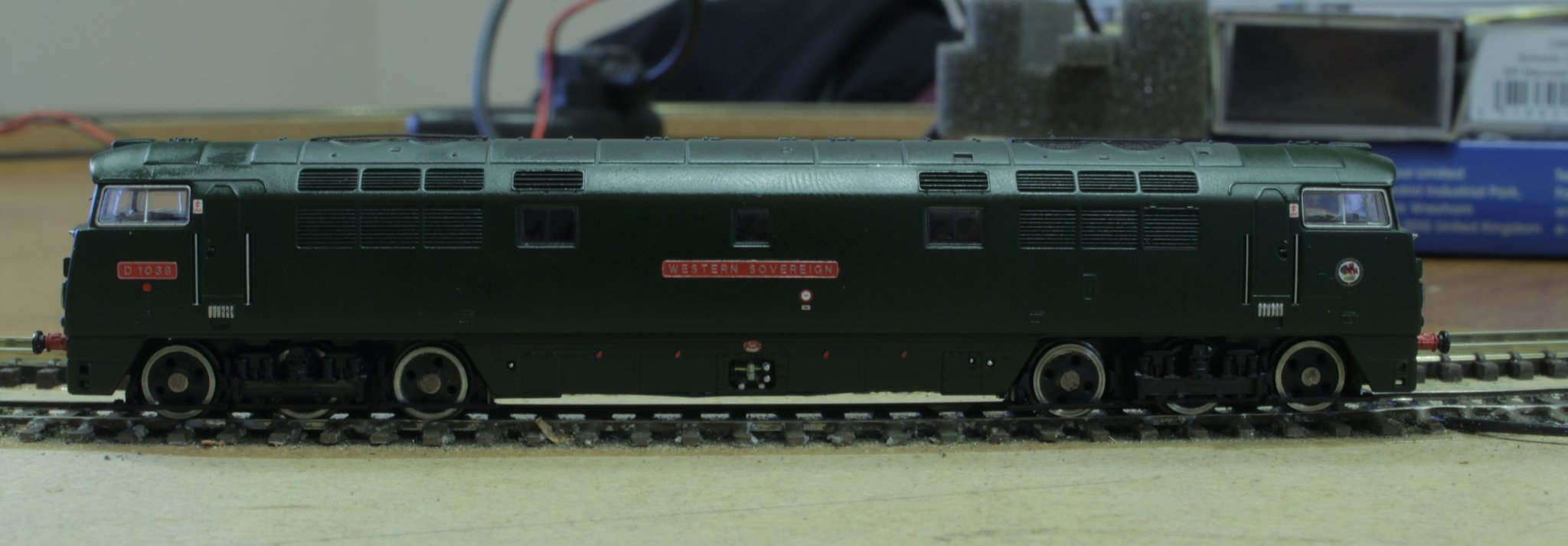
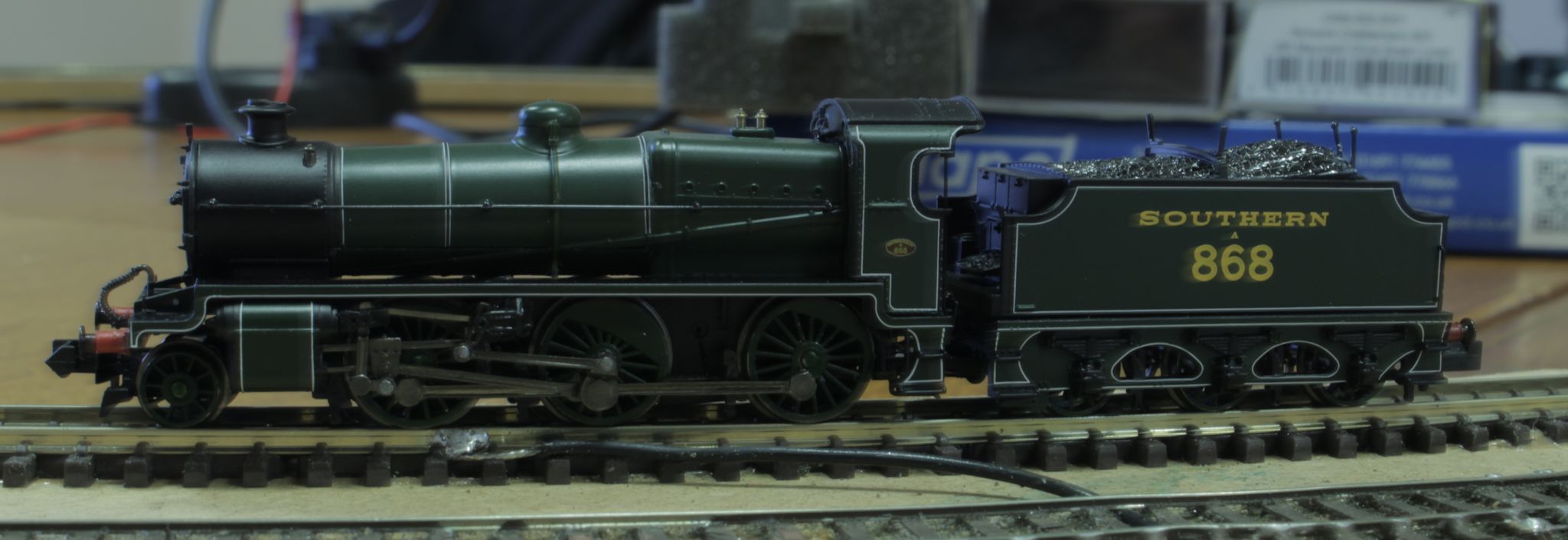
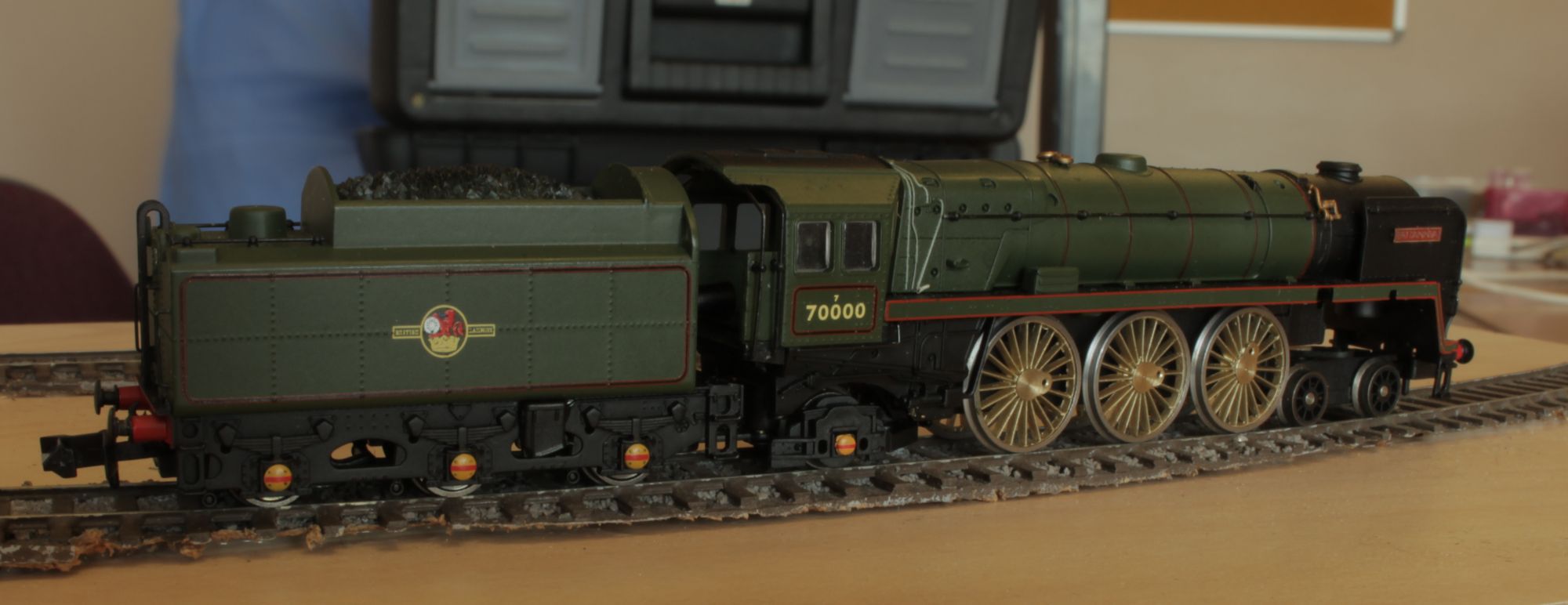
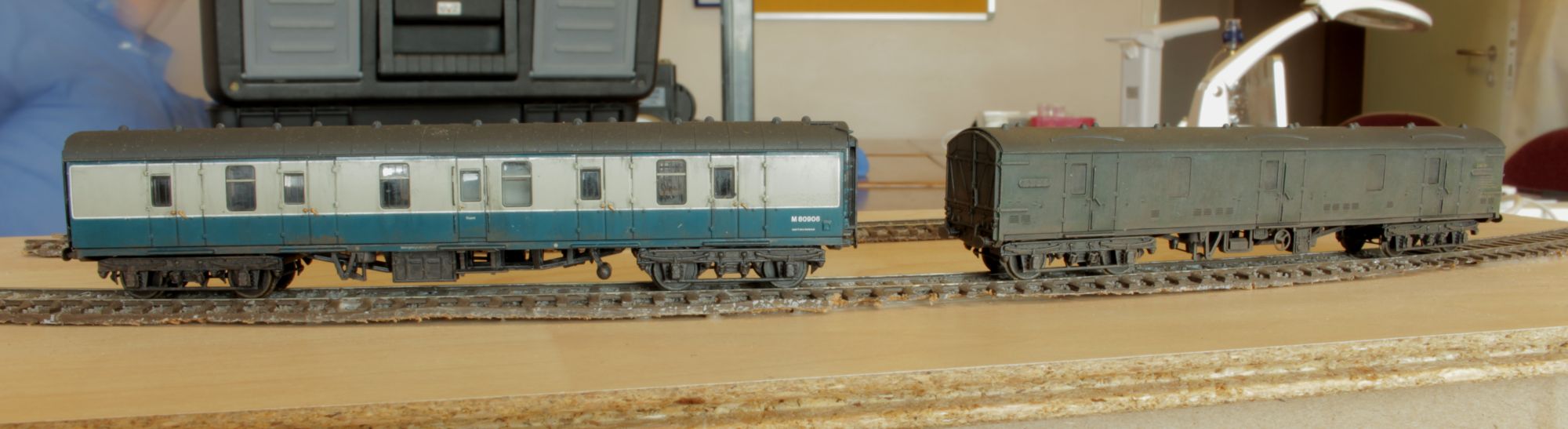
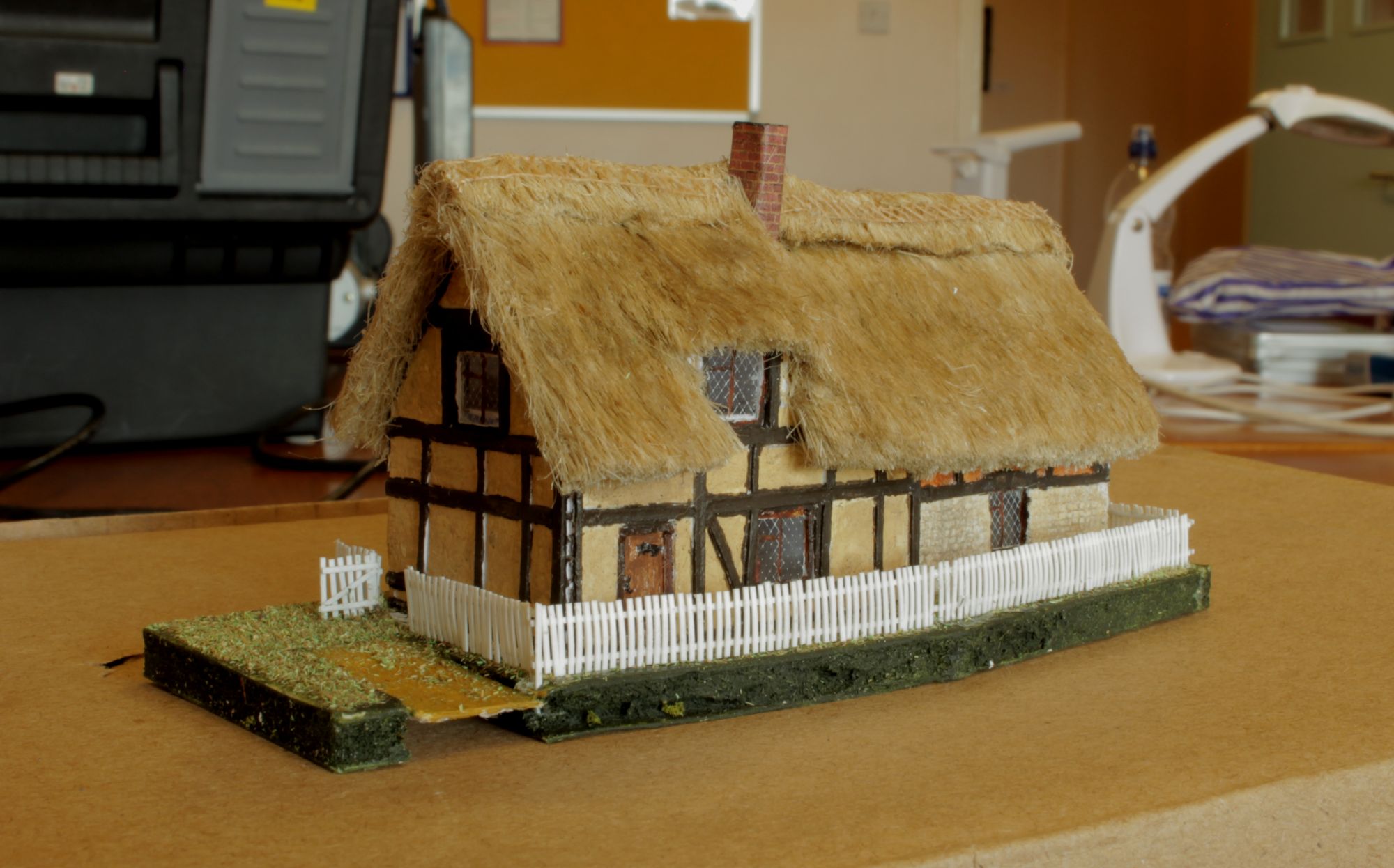
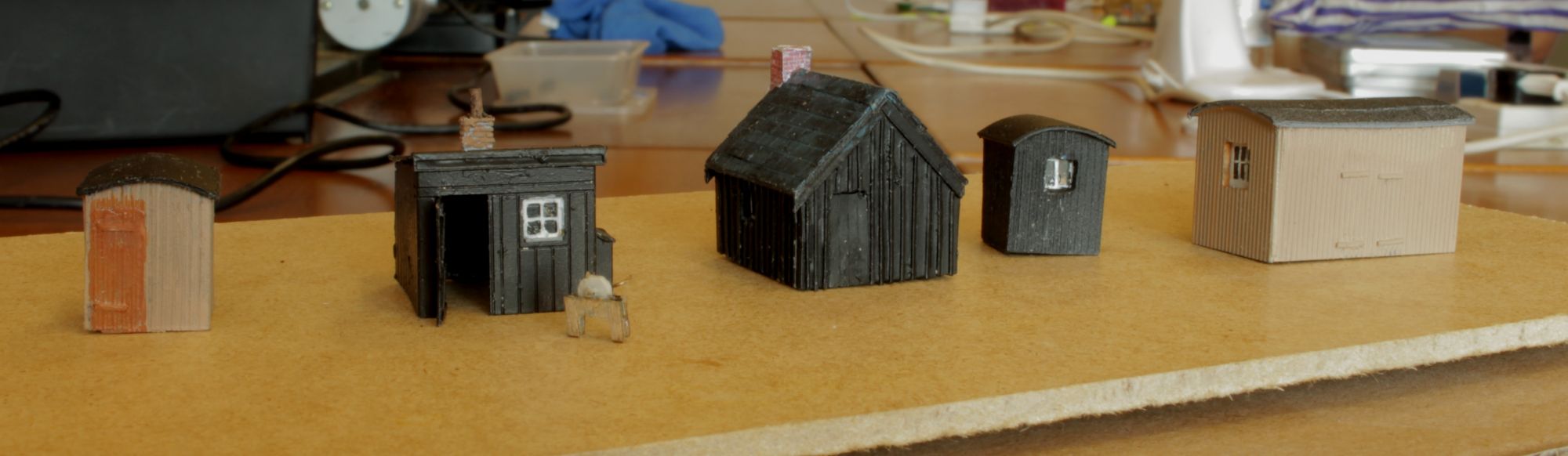
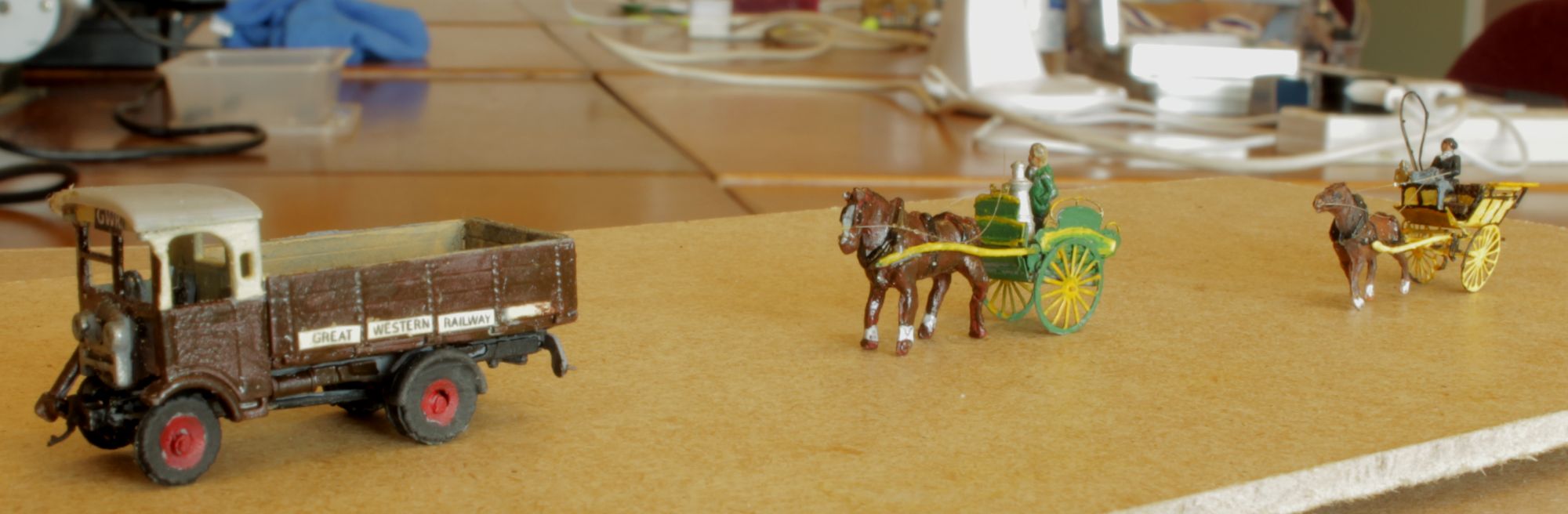
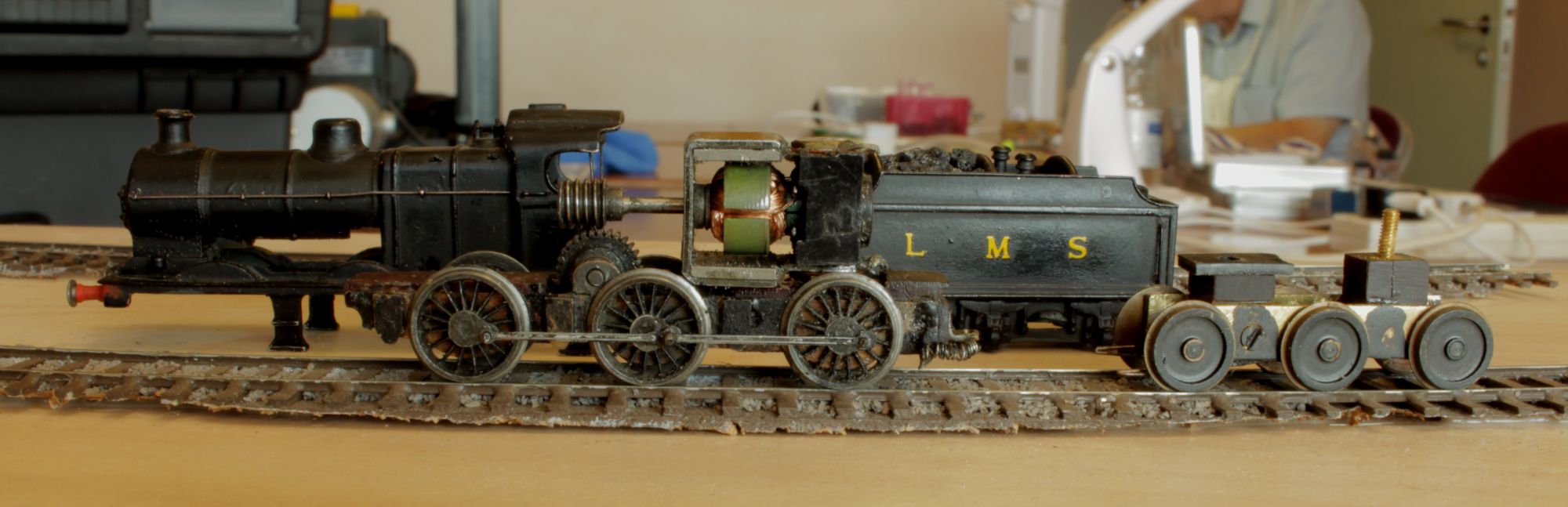
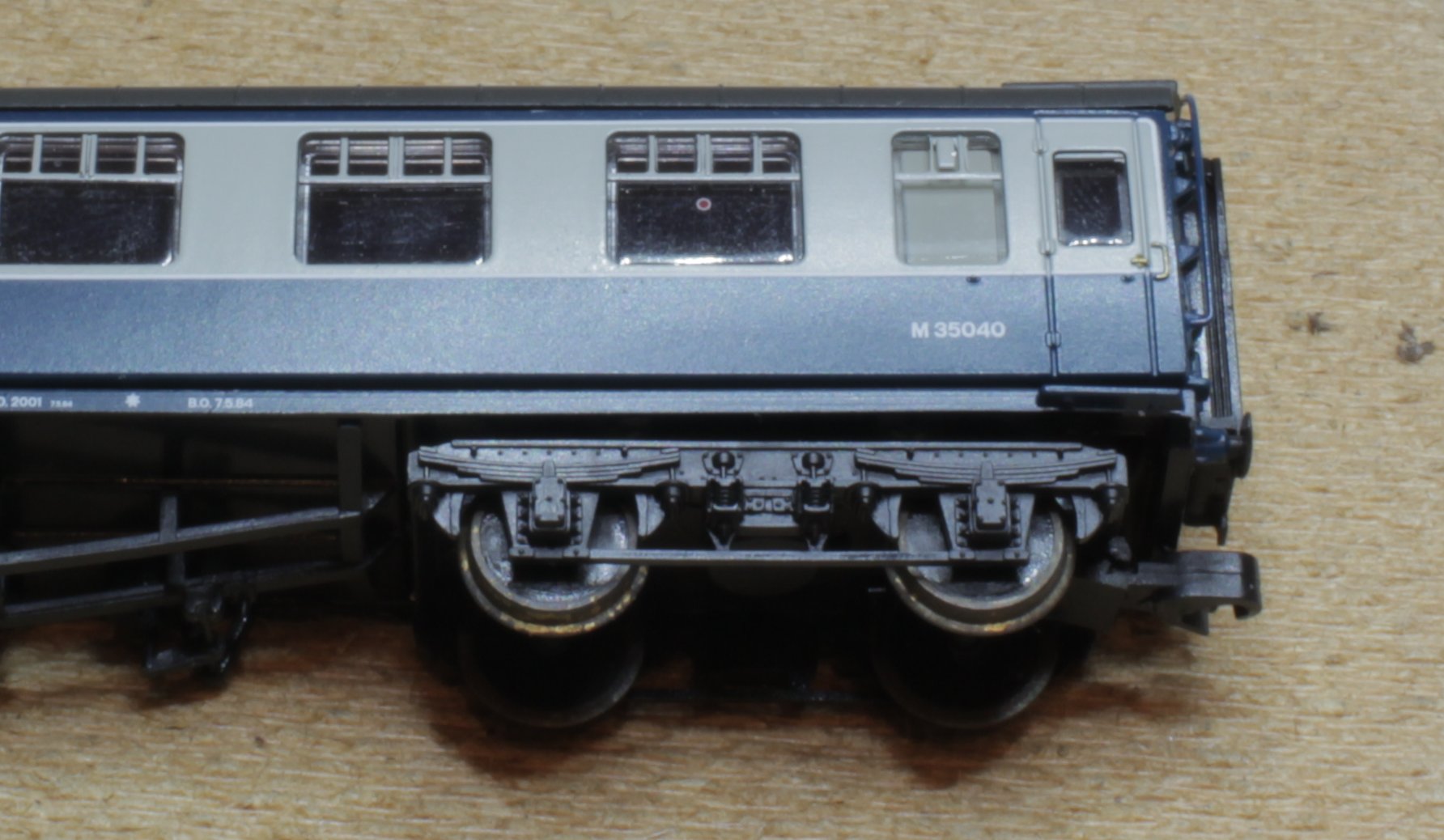
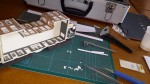
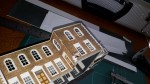
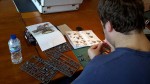
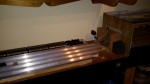
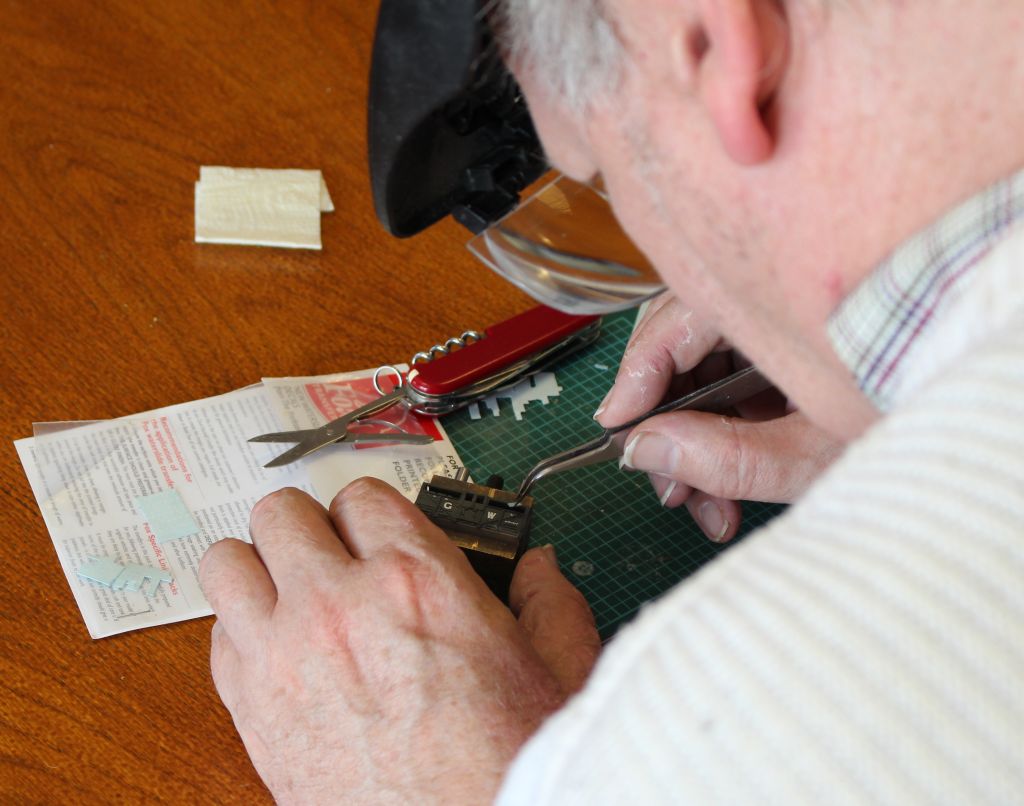
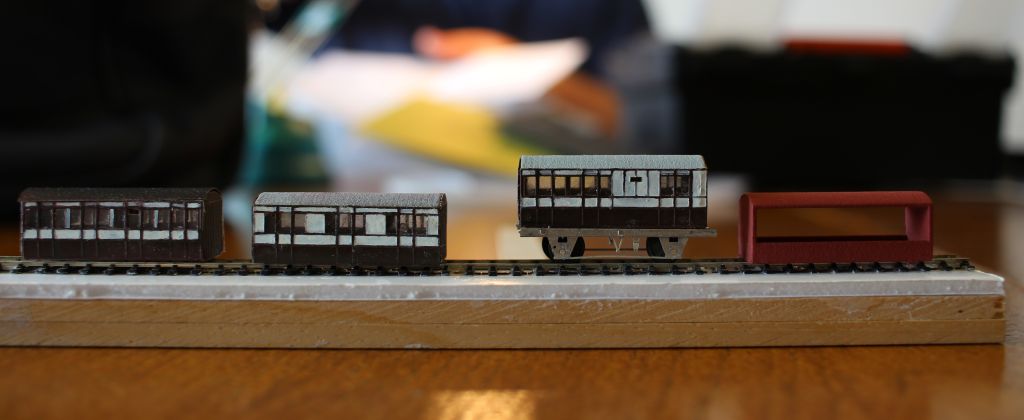
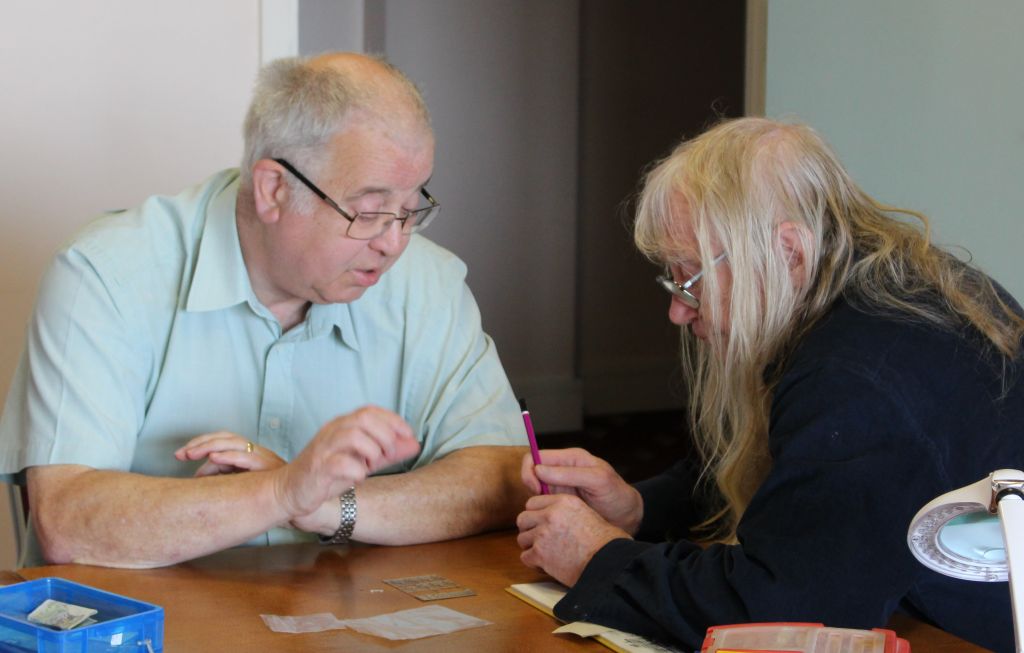
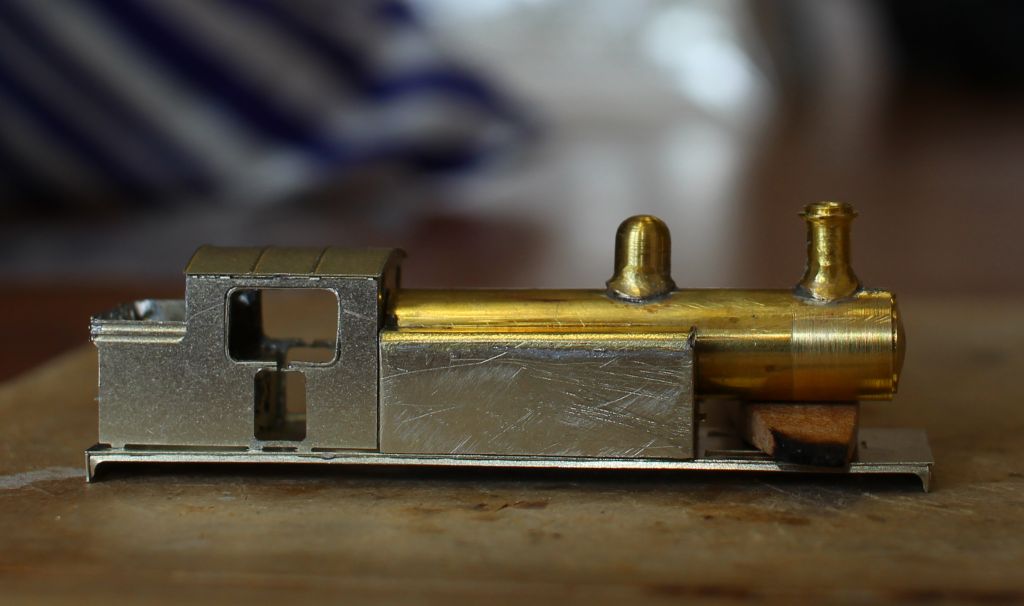
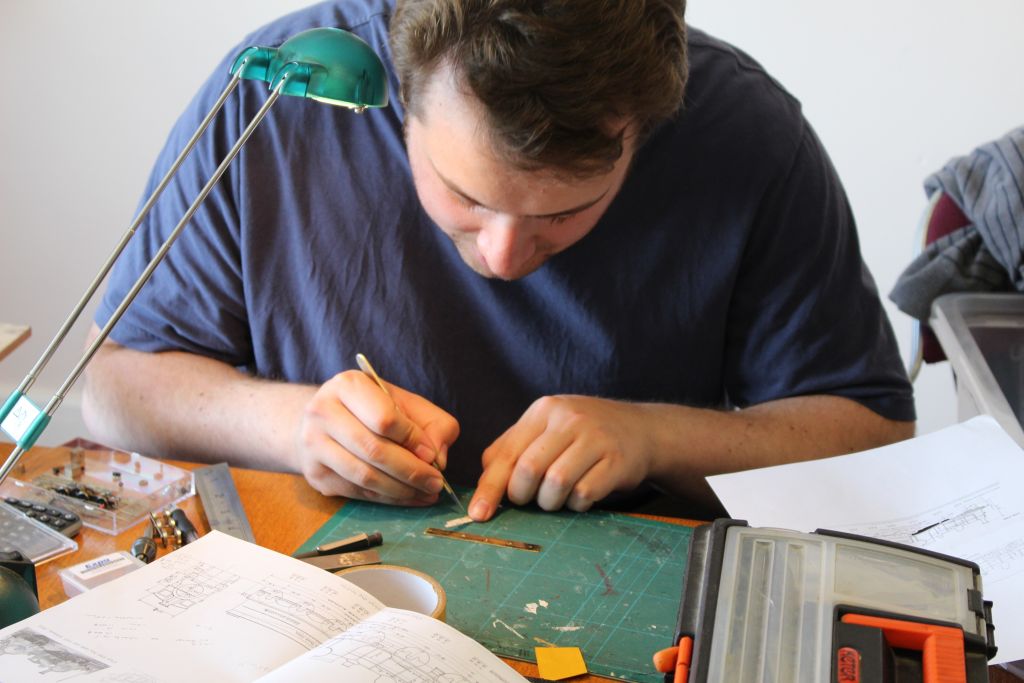
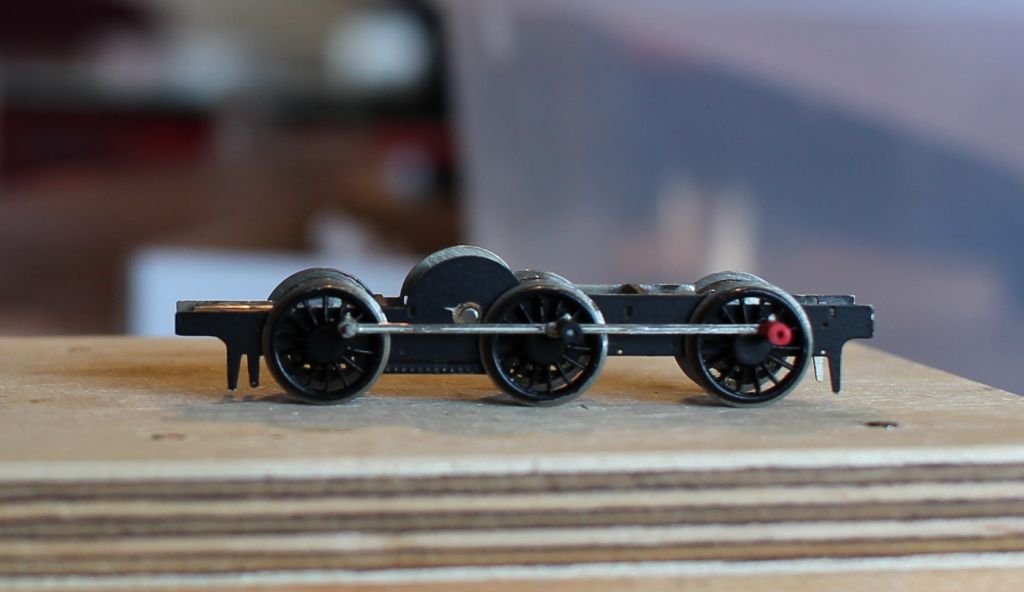
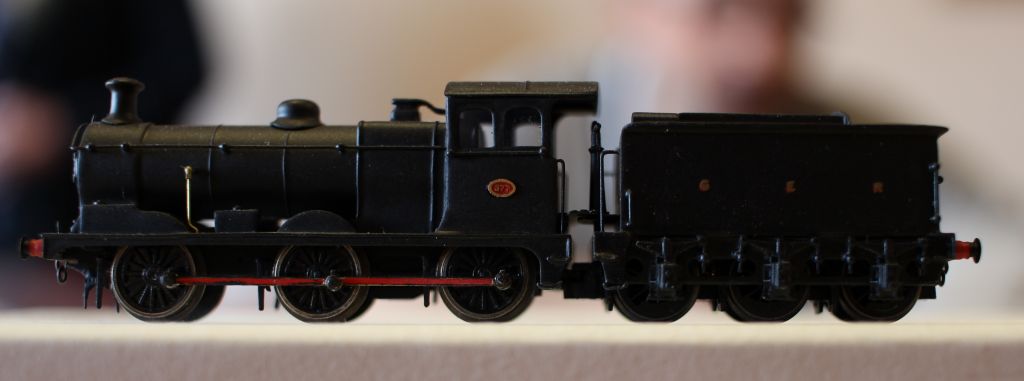
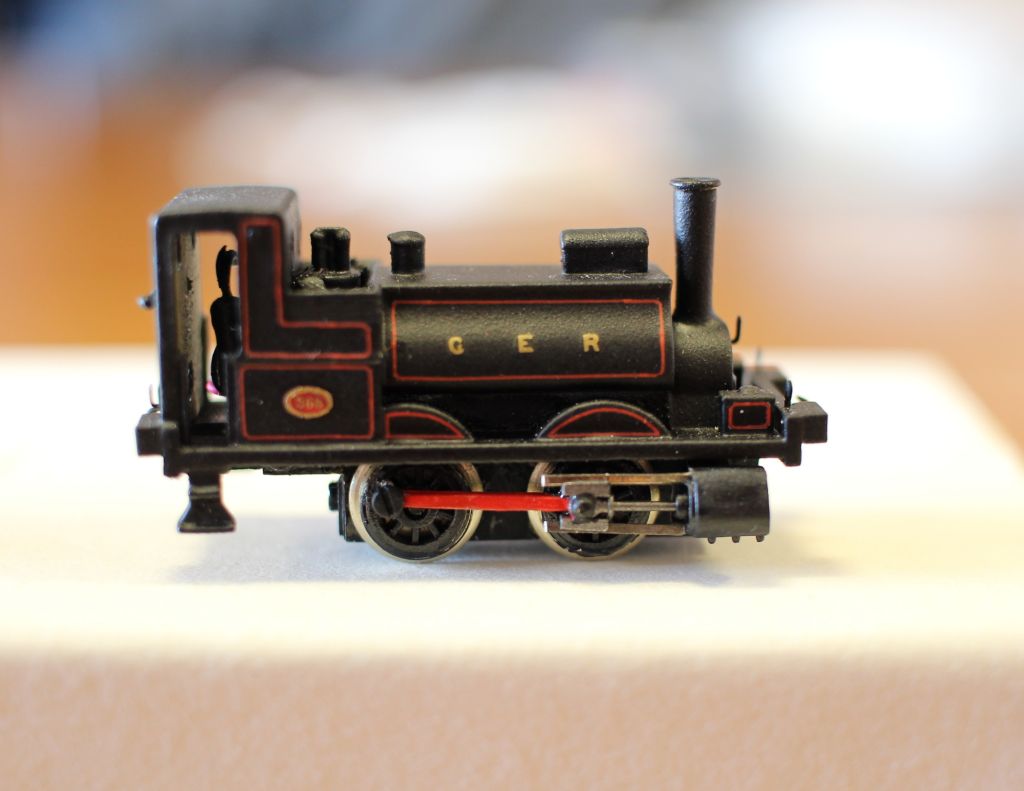
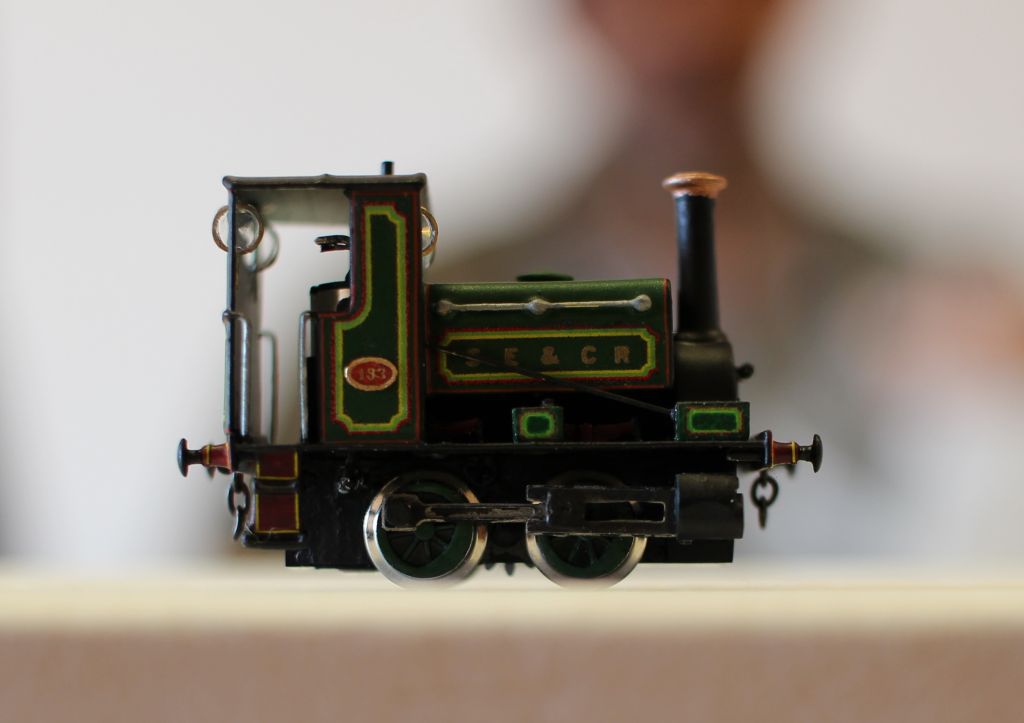
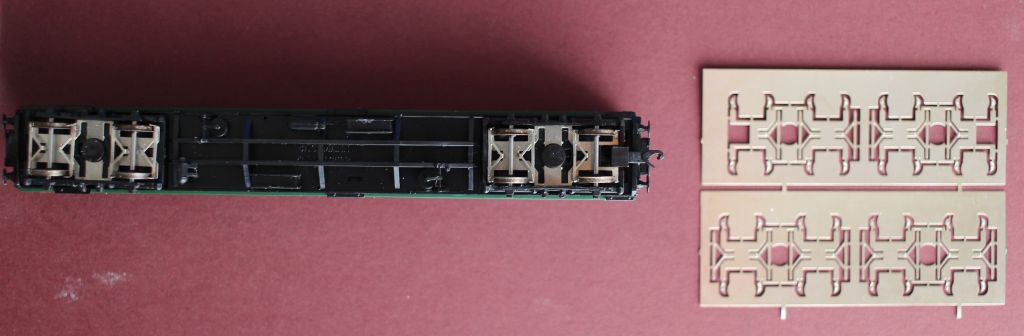
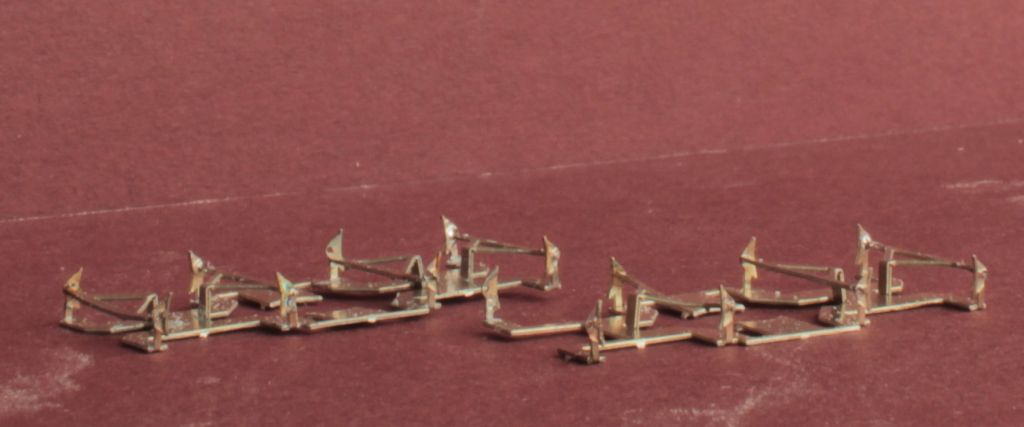
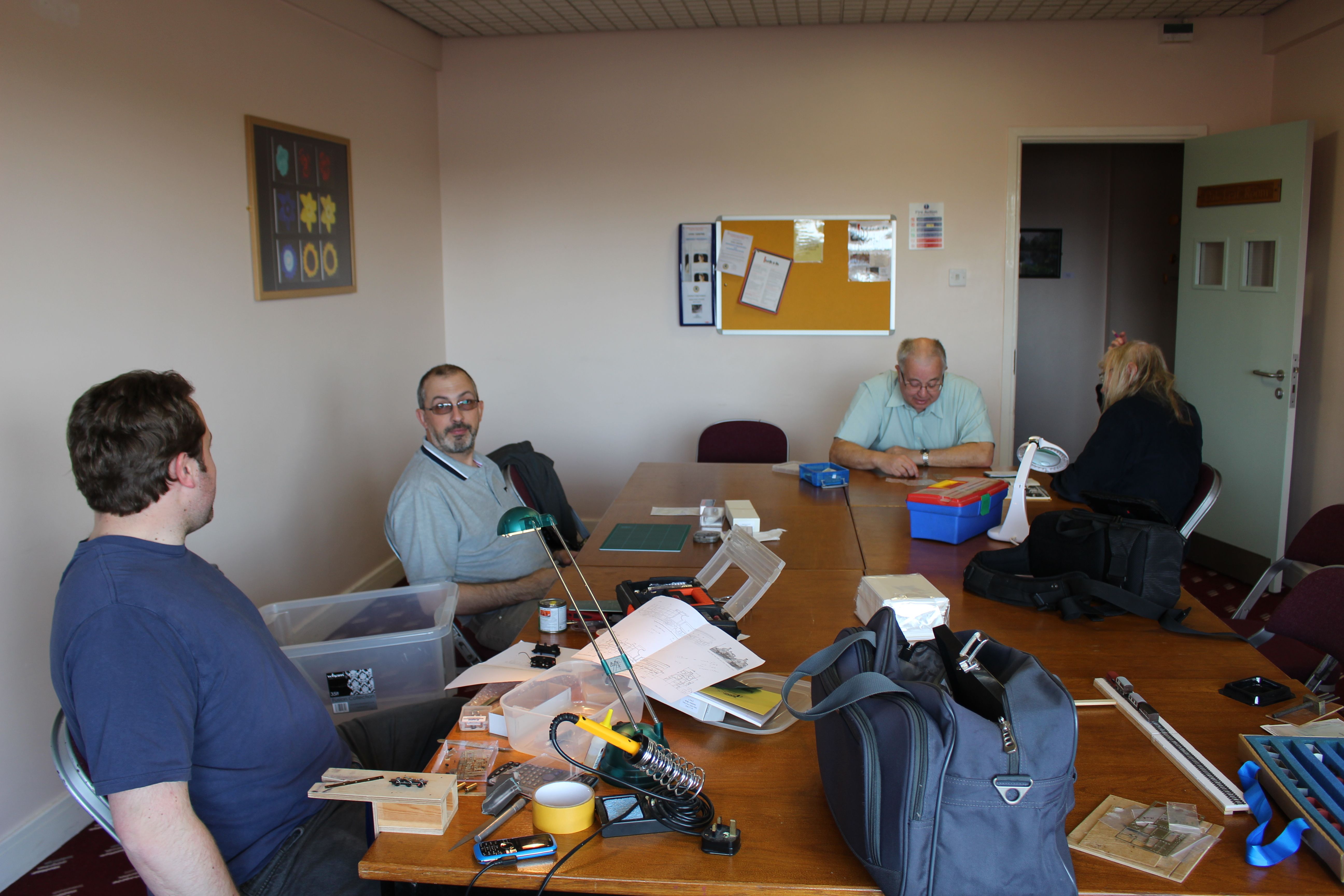
For our May meeting we hired the larger room at our meeting venue and several members took advantage of the extra space to bring along their layouts.
Thanks to Nigel for the photos.
For our May meeting we hired the larger room at our meeting venue and several members took advantage of the extra space to bring along their layouts.
Thanks to Nigel for the photos.
Here’s a picture of my first fs160 turnout
It’s not pretty , particularly the moving tie-bar, but it is only destined for the test track. It was built to test out the fs160 gauges kindly made for me by Alan Smith.
For those that don’t know, fs160 takes the 2mm Scale Association standards and adjusts them for 9mm gauge track at a scale of 1:160 (where 9mm is correct for standard gauge). It is intended for European and American standard gauge prototypes but could just as easily be used for 3mm or 4mm scale narrow gauge modelling.
Further details and a full set of standards for standard and narrow gauge can be found at http://www.fs160.eu/
I recently built one of the ingenious turnout operating units developed as part of the Easitrac project. Whilst designed for use with Easitrac it will work equally well with turnouts constructed using other methods.
Although the design is relatively simple, the construction method is not immediately obvious and it took a few questions on the 2mm Virtual Area Group and a chat with one of the Easitrac consortium before I properly understood how it was supposed to go together.
I filmed the construction process and the video can be seen below (just press the play button). Nigel Cliffe has also prepared a wonderful 3D drawing showing the assembly sequence which you can view here.
Some notes on the video:
1. The two bits of rod shown are replacements for those that came with the kit which were too large to fit the holes in the small discs. Only one is in fact needed. Mine are longer than the originals as I cut them down to size later (it makes for easier handling).
2. There are two actuating arms, one with one straight arm, the other with two arms at right angles. These are optional and you can choose whichever best suits your needs.
3. The top plate has a “T” slot in it and you need to place the spigot of the smaller threaded rod in the horizontal slot with the rod you soldered on previously in the vertical slot. This creates a cam that provides the horizontal movement (see photo below).
If you’ve seen the video you will have noticed that the top plate has a slight vertical wobble when moving horizontally. I subsequently took the top plate apart and noticed that the discs are slightly dished. It may be that flattening both would have been sufficient but I felt that things could be improved by having a larger lower disc which would restrict the top plate from moving vertically. I cut a piece of nickel silver strip the same size as the top plate, used one of the discs to drill holes at the correct distance, then cut and filed away the part that protruded to the rear of the top plate at each extreme to leave an almost triangular shape. I soldered one of the flattened discs on top to retain it all and it now glides back and forth smoothly.
I hope the video makes the construction sequence reasonably clear.
I have recently built an all plastic Easitrac turnout and this unit has been earmarked to operate it. I may detail the installation of the unit in another post if there is any interest. I will show the modifications I made to the top plate in this video also.
For our August meeting the group decided to do something different. The five of us converged on Long Wittenham to sample the wonders of Pendon.
For many of us it was our first visit and we were suitably awed at the quality of modelling. I can’t believe there is many a modeller who could leave there without being inspired to push their modelling just a little further. We had planned to go on to the Didcot Railway centre but we spent so long at Pendon that we ran out of time.
If you haven’t been before now is a good time to go as they have a special exhibition devoted to Guy Williams. Check the website for opening times as they are not open all the time.
The coupling rods were straightened and re-attached. A little thought revealed that the two larger pins are for the centre wheels.
I thinned the brake rods down so that they cleared the wheels. The following photograph shows a comparison between the thinned side (at the bottom) and the original plastic at the top.
Assembling the chassis revealed that the brake shoes were touching the wheels in a few places. I repositioned them by briefly applying the tip of a soldering iron to the base and bending the shoes slightly forward. (I was not paying close enough attention when doing one and managed to melt the plastic where the brake rods are attached – this I still have to rectify).
The wheels have a tendency to turn on the axles if you give them a slight twist. Surprisingly, this seems not to be the problem it appears, probably because all the wheels are fully geared. However one wheel gripped even less and was found to turn while the chassis was running causing the wheels to lock up. I fixed this with some “engineering adhesive” (a loctite-type liquid I purchased from Eileen’s Emporium some years ago). This refused to bite at first but after a couple of days it had gripped the wheel sufficiently.
The chassis then ran (up against a stop block) for a couple of hours without problem. I may take it to the next Wealden group meeting to give it a chance to stretch its legs on Nigel’s portable test track.
I re-soldered the chip with shorter wires (including re-soldering one wire where it attaches to the chip to allow it to bend at right angles) and the chip is now less obtrusive in the cab – if you squint it could well be a fireman hunched over his shovel though this is not going to pass any close up photography tests!
The only matters left outstanding are the repainting of the wheel rims and the fact that the body is refusing to sit snugly against the chassis for some reason, but that is something for another time.
This has been a very quick and easy conversion, thanks in part to the extensive help I received from fellow members of the Wealden Area Group.
I’m always looking for rough-and-ready ways of getting things done, often so rough that I end up having to do it all again, but this one worked well. It’s only any good for locos with identical spoked wheels on all axles.
All that’s needed is a bit of brass sheet thin enough to slide between the outside face of the chassis and the back of the wheels when the back-to-back is set correctly. Bend the sheet into a rough U shape as in the photo, file a couple of notches in the ‘wings’, then assemble the wheels on a muff in the chassis and wriggle the wings up behind the wheels so that the notches fit under the axles. Turn the left-side wheel until the crankpin is facing downwards and drill a hole through the wing in the gap beween the spokes adjacent to the crankpin. Push a bit of brass wire through the hole so that the wheel can’t rotate. Obviously the wire needs to be a tight fit between the spokes and in the hole. Now rotate the other wheel until its crankpin is at 90 degrees (ish) to the first one, and drill a hole between two spokes on that side. Pop a pin in and make sure both wheels are locked in position.
Remove the pins and the tool, and you now have a template for positioning the wheels on the other axles. I found that the coupling rods dropped onto the crankpins first time, and only a hairsbreadth of adjustment was needed to relieve a minute tight spot.
The tool is a throw-away but it only takes fifteen minutes to make, involves no measuring or marking-out and costs nothing.
At our group meeting on Saturday Nigel kindly turned the wheels of the Terrier down to finescale standards.
There wasn’t much to come off but the result is certainly worth it.
You can see from the above picture how flimsy the Dapol coupling rods are! The chassis is fully geared so the rods just go along for the ride which was lucky because the Dapol wheels slipped on their axles during the above process and needed re-quartering. In this case it is sufficient to get them close enough.
As well as straightening the coupling rods (again) I also need to reduce the height of the crank pins on one side which you will see refused to go in to the wheel as much as they did on the other side. Getting the pins in was difficult until Guy showed me a trick for holding small items using double sided tape stuck to the end of a pointed object.
When set to 9.42mm gauge the wheels just foul the plastic brake rods which will need to be filed, but only a little as they do a good job of keeping the wheels central without having to add any washers.
It looks as if the body will escape without any surgery. I have reassembled the chassis and found it impossible so far to get the front pickups in contact with the wheels – it is necessary to spring them out of the way when re-fitting the wheels and this is enough to make them lose contact. I will have to think about this…
I have also added a chip (CT DCX74z) which, although it replaced the resistor board, now intrudes quite noticeably into the cab. I may have a go at re-soldering the wires to the motor in a neater fashion which may save me a bit of space.
I’ve been asked how I got the Dapol Terrier to pieces and as it is easier to explain these things in pictures I thought I would put a few here:
1. The body is separated from the underframe by releasing four clips on the underside of the footplate.
2. The footplate is connected to the rest of the underframe by (1) a clip underneath the resistor board and (2) two clips either side of the worm gear. Unclip the first from above then gently splay out the footplate near the worm gear to release the others.

The clips that hold the underframe to the footplate. There is another clip on the other side of the worm gear.
3. The brake gear is clipped to the wheel block at the front and back where indicated. Gently(!) bend the front and back of the combined unit and the brake gear will come away. If you did it gently you won’t need to extricate the wheel block from the dog bowl. At least the wheels don’t just drop out.
A quick update: The crank pinks are a push fit and can be removed by teasing them gently out of the hole. The coupling rods are very thin so take care not to damage them doing this.
The wheels simply un-clip from the frame with a small amount of upward force.
More after our appointment with the lathe at Saturday’s area group meeting.
I picked up one of the lovely new Terriers which Dapol have just released and I am contemplating the best way to convert it to 9.42mm gauge.
As you can see from the above I have already dismantled it. The resistor block will be discarded and a DCX74z chip put in its place.
Nigel has kindly offered to do some flange reduction at our next meeting though there doesn’t appear to be much that could be removed. The wheels look pretty close to the 2mm standard (apart from the tyre width which is far too thick) and I am wondering whether pushing them out to 9.42mm gauge would be sufficient.
At present the wheels do not want to drop out of the frames – presumably the gears are keeping them in place? I wonder what the best method for adjusting the back to back would be?
The chunky plastic brake rods are going to foul the wheels when re-gauged and will probably be sliced off to be replaced with brass strip.
Powered by WordPress